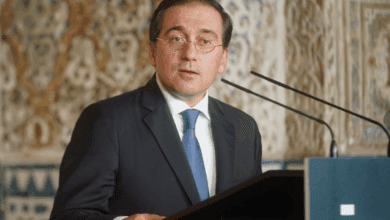
A drop in temperatures has brought temporary relief in the fight against wildfires in northwest Spain, but political tensions between the central government and regional administrations have only intensified. The head of the national civil protection service, Virginia Barcones, accused the leaders of Galicia, Castilla y León, and Extremadura of making unfounded demands on Madrid and fueling an artificial controversy over the allocation of firefighting resources.
According to Barcones, regional leaders representing the opposition party are making deliberately unfeasible requests, including calls for military units beyond what is possible in such emergencies. She stressed that mobilizing heavy equipment and aircraft requires time and logistical planning, and dismissed accusations of slow response as unfounded.
Barcones also pointed out that responsibility for immediate response to fires lies with the regional administrations, while the central government has provided all requested resources. She expressed concern over attempts by certain politicians to shift the blame for the disaster’s consequences onto Madrid to avoid scrutiny of their own shortcomings in managing the situation locally.
As an example of ineffective coordination, Barcones cited an incident where a firefighting crew dispatched to one of the regions waited for a long time at a gas station because they could not get instructions on where to proceed. Additionally, it was revealed that in Castilla y León, some command centers provided at the region’s request were activated late or were not fully utilized.
Defense Minister Margarita Robles also criticized the regional authorities, reminding that army units and equipment were involved from the first days of the emergency. According to her, some resources remained unused due to the fault of local administrations.
Currently, more than 1,400 military personnel are deployed in the fight against the fire, with about 2,000 more providing support and crew rotations. International forces have also joined the operation: aircraft and firefighters from Italy, the Netherlands, the Czech Republic, Slovenia, Germany, France, and Finland are working in Spain. Romanian specialists are expected to arrive, but their participation has been postponed, as Extremadura refused to include them due to a lack of its own equipment.
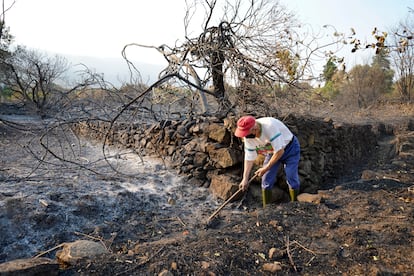
According to the European satellite system Copernicus, nearly 392,000 hectares of forest have burned in Spain since the beginning of the year, of which about 350,000 were lost in just the past few weeks. Environmentalists warn that 2025 could set a new record for the area burned in recent decades.
There is particular concern about the wildfire in the Jarilla area (Jarilla) in Extremadura, where the fire has already destroyed 16,000 hectares and threatens the Jerte Valley (Jerte). More than 20 aircraft are involved in the region, but strong winds are hampering rescue efforts. Residents of settlements bordering Salamanca are on standby for evacuation.
In Galicia, seven major fires continue to burn in the province of Ourense, where more than 67,500 hectares have already been destroyed. The largest remains the fire in Larouco, which has spread over 20,000 hectares in a week and affected ten municipalities, crossing the Sil River into the province of Lugo.
In Castilla y León, the situation is gradually stabilizing. In particular, the fire in Yeres (Yeres), which affected the Las Médulas Natural Park—a UNESCO World Heritage Site—has been downgraded to a lower danger level. Thanks to the improved situation, residents of several evacuated villages have already returned home.
The region is still battling seven major wildfires, including in Fasgar, Anllares del Sil, Barniedo de la Reina, Llamas de Cabrera, and Gestoso (all in the province of León), as well as in Porto (Zamora) and Cardaño de Arriba (Palencia). Authorities note that weather conditions are helping to contain the fires, and expect further improvement.
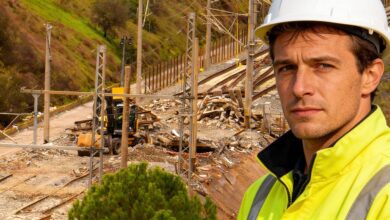
Meanwhile, rail service between Madrid and Galicia, which was suspended due to the fires, has been restored. This will allow for faster delivery of aid and the evacuation of residents if necessary.
Experts emphasize that this year’s wildfire season has been one of the most challenging for Spain in recent years. Authorities at all levels are calling for coordinated efforts and urging against politicizing the fight against the disaster, aiming to minimize damage to nature and the population.