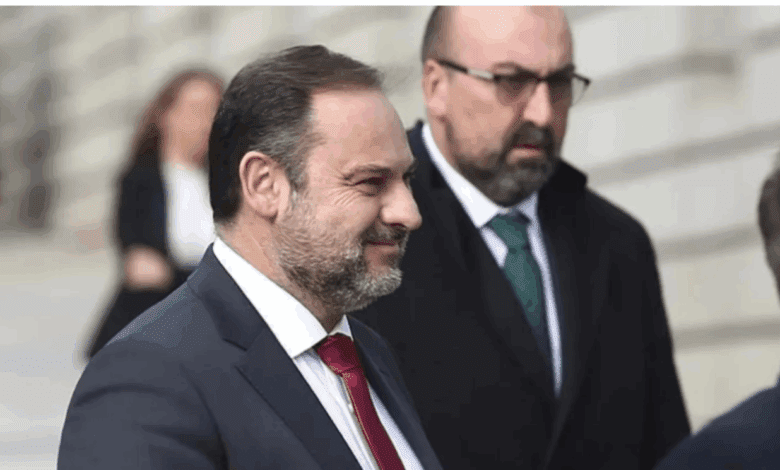
The lower house of the Spanish parliament (Congreso de los Diputados) has decided to temporarily suspend deputy José Luis Ábalos after it was confirmed that he is officially under criminal investigation. This decision sparked significant debate among politicians and experts, as such measures against sitting deputies are extremely rare. The Congress’s move has been seen as a signal of changing attitudes toward political accountability and transparency.
At the same time, heated debates about social policy and the need to reform the income redistribution system continue in Spain. During a recent forum on third sector issues, organization chair Xavier Trabado noted that the country does not suffer from excessive tax pressure compared to other European states. According to him, Spain has the potential to further develop fair and effective social programs.
Social inequality
Trabado emphasized that a market economy inevitably creates inequality, and addressing it requires increasing state intervention. He pointed out that there is a growing rhetoric today aimed against global initiatives, climate change efforts, and support for developing countries. In his view, such sentiments, actively promoted by some political leaders, could undermine social cohesion.
There is particular concern about the influence of right-wing coalitions in the European Union and the spread of their ideas through social media. Trabado believes that in order to maintain balance in society, it is essential to support traditional media, which can provide objective and verified information.
Pension system and housing
The discussion also touched on the pension system. According to Trabado, the current model provides stability, but improving the quality of life for the elderly requires not only expanding the network of nursing homes, but also investing in active aging programs. He noted that citizens expect not only financial support from the government, but also the creation of conditions for a fulfilling and active old age.
The problem of affordable housing remains equally urgent. Spain faces a serious shortage of social housing, which negatively affects the living standards of low-income families. Trabado recalled the Catalan government’s plans to increase investment in this sector, but stressed that the current system of funding for autonomous communities is unfair to the region.
Professionalism in management
Another key issue raised was the need to improve professionalism within government bodies. Trabado expressed the view that frequent changes in administrative leadership hinder effective management and the implementation of long-term projects. He called for the creation of a more stable and competent management system, where political decisions are paired with professional execution.
According to him, only with a strong and responsible administration is it possible to build a modern and just society. At the same time, he emphasized that this does not mean a complete technocratization of power — political leaders should set priorities, while professional managers ensure their implementation.
The role of the third sector
Trabado also pointed out the importance of non-profit organizations in Catalonia and expressed regret over attempts to discredit their work. He advocated for developing partnerships between large and small organizations, stressing that even the smallest entities make a significant contribution to addressing social issues.
In closing the discussion, he compared approaches to finding solutions: instead of relying on “charlatans” who promise easy answers, it is better to support those who are willing to experiment and implement genuinely effective initiatives. Trabado expressed hope for closer cooperation with government bodies to carry out concrete projects and also lamented the delays in passing important laws concerning the third sector, the elderly, and the homeless.
Incidentally, José Luis Ábalos is a well-known Spanish politician and former Minister of Transport, Mobility and Urban Agenda. He was one of the key members of the Spanish Socialist Workers’ Party (PSOE) and actively participated in developing a range of reforms. His work has repeatedly attracted public attention, and decisions made with his involvement have had a significant impact on the country’s social and economic policies.