Decisions made by the Council of Ministers of Spain have the potential to reshape the usual order in the country’s economy and healthcare system. As public concern grows over rising prices and the quality of medical services, the government is opting for direct intervention in key sectors. The new laws will impact not only large businesses but also the daily lives of millions of Spaniards, as well as the balance of power between Madrid and the regions.
Two main initiatives are in the spotlight: limiting private management in public hospitals and introducing a price regulation mechanism for essential goods and services during emergencies. These measures have sparked intense reactions from business leaders, regional authorities, and experts, as they involve a fundamental reassessment of cooperation between the state and the private sector.
Hospital oversight
The first bill is aimed at virtually eliminating private companies from managing public healthcare facilities. From now on, such arrangements will only be allowed in exceptional circumstances, after a mandatory multi-stage review and approval by a special commission. In particular, this move will strike at the Madrid healthcare model, where four out of eight such centers in the country operate under a mixed-management scheme.
The introduction of mandatory preliminary review, the preparation of justifications, and the conclusions of independent bodies will become the new standard for any project involving private capital in the national healthcare system. Moreover, the law provides for the possibility of revising existing agreements, which could result in a number of hospitals returning to full state control.
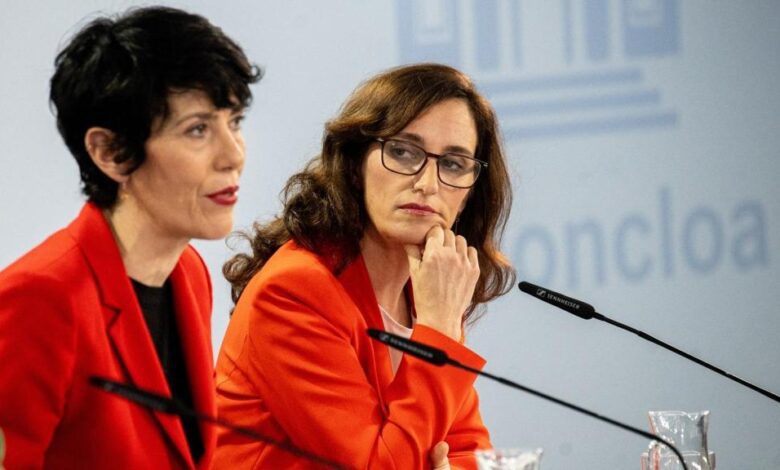
Minister of Health Mónica García called this a “victory of society over speculative interests,” emphasizing that the new rules exclude all models where profit becomes a priority. At the same time, supporters of mixed models point out that such projects were previously considered among the most effective by several indicators.
Prices under control
The second initiative concerns the regulation of prices for food, transportation, and energy during emergency situations. The government will now be able to set maximum prices based on the previous month’s cost analysis, with additional adjustments if growth exceeds a specific threshold. This measure is explained by the need to protect consumers from sudden price surges during crises, similar to those that occurred after natural disasters or emergencies.
Minister of Social Rights Pablo Bustinduy emphasized that the new rules will prevent companies from abusing emergency situations to unjustifiably raise prices. If the established limit is exceeded, the difference will be automatically refunded to consumers.
The mechanism applies not only to food and transportation, but also to energy, paving the way for direct intervention in electricity, gasoline, and diesel rates. Price increases are permitted if they are objectively caused by higher costs, but companies are prohibited from expanding their margins due to crisis situations.
Political implications
The introduction of new restrictions has already created tension between the central government and the autonomous communities, particularly in Madrid, where a more liberal approach to managing healthcare is traditionally favored. Regional government officials fear that their powers will be significantly reduced and opportunities for cooperation with the private sector will be minimized.
The business community has also voiced concern: in their view, such measures could reduce the country’s investment appeal and lead to less innovation in key sectors. Meanwhile, supporters of the reforms argue that government oversight is necessary to protect citizens’ interests during times of instability.
In recent years, Spain has already faced situations where emergency government measures became the only way to stabilize the situation. For example, after devastating natural disasters in Andalucía, the authorities announced a full mobilization of resources to support those affected, which was detailed in the report on the large-scale mobilization of resources to eliminate the consequences of the disaster.
New rules for everyone
In addition to the two key initiatives, the government is continuing its course to strengthen state control in other areas. Plans have already been announced to limit private involvement in vocational education, create a national program to regulate the housing market, and introduce new standards for consumer protection.
Additional measures are expected soon to protect minors on the internet, ban anyone under 18 from attending bullfights, tighten control over the sale of harmful products through vending machines, and limit sugar content in beverages. A total smoking ban on open-air terraces of cafes and restaurants may also be introduced soon.
All these steps are shaping a new model of interaction between the state, business, and society, where the interests of the majority are prioritized over those of individual economic groups. However, debates on the appropriateness and effectiveness of this approach persist, and the ultimate consequences for the economy and the social sphere remain a hot topic for discussion.
In recent years, Spain has repeatedly faced the need for emergency government intervention in the economy and social sphere. Following natural disasters such as floods or wildfires, the government introduced temporary price restrictions and tightened controls over resource distribution. Similar measures were implemented in other EU countries, where price regulation on fuel and food became a response to sharp inflation spikes. Domestically, such decisions often sparked fierce political debates, especially when it came to balancing consumer protection and entrepreneurial freedom. As a result, every new state intervention in the economy generates broad public resonance and prompts a re-examination of development strategies for key sectors.