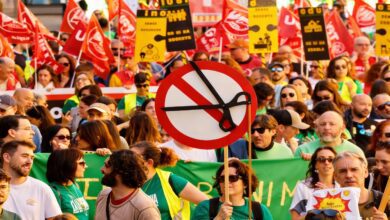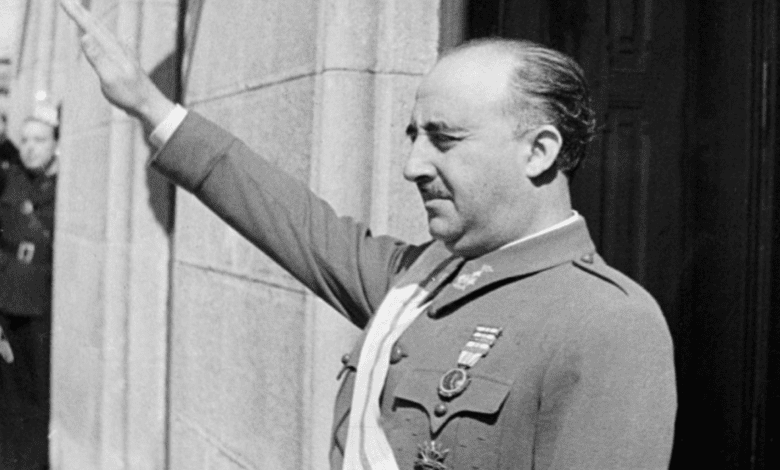
Spain is once again debating an alarming trend: a significant number of young people are expressing sympathy for Franco’s dictatorship. History teacher David Fernández de Arriba, who has been teaching at a secondary school since 2010, does not hide his concern. He notes that among teenagers, phrases that recently seemed unthinkable are being voiced more and more often. Some say jokingly, ‘That didn’t happen under Franco,’ while others mean it seriously. But what’s really behind these words?
Fernández is convinced: the problem is not just adolescent rebellion. In his view, young people often simply do not know what really happened in Spain during the years of dictatorship. According to him, this topic is either mentioned only briefly in schools or is entirely up to the discretion of each individual teacher. As a result, many students end up with a distorted understanding of the country’s past.
The dangers of historical revisionism
The teacher is particularly troubled by the influence of modern media. He points out that bloggers and pseudo-journalists who portray Franco’s history in a favorable light are increasingly visible online and on social networks. They don’t hesitate to twist facts or, at times, flat-out lie. Young people, lacking a solid factual foundation, are easily swayed by such manipulations.
Fernández warns that this kind of revisionism is dangerous. It not only prevents an objective assessment of the past, but also shapes false values among teenagers. As a result, some young people begin to view the dictatorship in a positive light, forgetting about the repression, censorship, and lack of freedoms.
Gaps in Education
A teacher explains that his school makes an effort to combat ignorance. From the first year of secondary school, they hold a Week of Historical Memory. Students watch films, learn about the context of past events, and discuss why it’s important to remember history. All this happens before upper grades begin covering complex topics related to the dictatorship.
However, according to Fernández, not all schools in Spain pay much attention to this. Often, it depends on the personal initiative of the teacher. If a teacher doesn’t see the need to discuss franquismo in detail, students might never learn what happened in the country in the mid-20th century. Yet this is the age when worldviews are shaped.
New Approaches
Interestingly, Fernández actively uses unconventional teaching methods. For example, he incorporates comics to make complex historical topics more accessible. He believes this format helps teenagers not only better understand historical events, but also feel a personal connection to the past. Dry textbooks rarely spark interest among students, but vivid illustrations and engaging stories are a different matter.
He is convinced: if young people aren’t taught what a dictatorship is, who Franco was, and where his decisions led, myths will fill the gap. And myths, as we know, are both persistent and dangerous—especially when charismatic online influencers spread them.
An Insider’s Perspective
Fernández is not inclined to demonize all young people. He notes that teenagers have a range of opinions, and far from all of them support Francoism. Many simply repeat phrases they’ve heard without thinking about their meaning. For this reason, he believes it’s crucial to speak openly and honestly with students, to address difficult topics directly, and not to shy away from controversial discussions.
In Spain, the topic of historical memory remains a sensitive issue. But if adults stay silent, others will speak up in their place—and not always with good intentions. Fernández is convinced: only through education can we counter the dangerous distortion of history. Otherwise, we risk one day waking up in a country where the past has once again become an object of veneration.