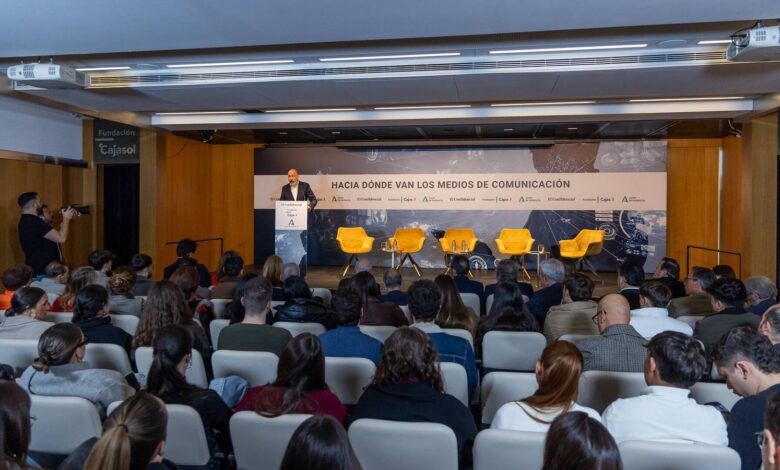
A meeting of leading representatives of Spanish media was held in Sevilla, where key challenges facing journalism in the coming years were discussed. Participants, including leaders of major publications, broadcasters, researchers, and educators, sought to define the profession’s path forward amid rising government pressure, technological change, and declining audience trust.
The event drew many communications students, who listened closely to advice and forecasts from experienced professionals. Discussions focused on the impact of digital platforms, social media, and artificial intelligence on newsrooms and how society perceives information.
Technology and New Formats: Challenges for Traditional Media
Over the past 25 years, Spanish media have moved from print newspapers to digital platforms, podcasts, and multimedia formats. According to forum participants, technological innovation has been the main driver of change. Many noted that journalism today requires not just strong storytelling but also the ability to use new tools, analyze vast amounts of data, and quickly adapt to a rapidly changing environment.
However, despite the abundance of new channels for distributing information, experts are convinced: the role of professional media remains crucial. As fake news and manipulation spread rapidly, only reliable sources can provide audiences with an accurate picture of what is happening.
Government pressure and economic risks
One of the main topics of discussion was the growing pressure on journalists from politicians and major corporations. Forum participants admitted that attempts to influence editorial policy, push favorable agendas, and even threaten economic sanctions are becoming increasingly common. This problem is especially acute during political crises or the publication of high-profile investigations.
The economic independence of newsrooms has also come under threat. Declining advertising revenues, competition from tech giants, and changing information consumption habits are forcing media outlets to seek new monetization models. Many editors admit that only those who manage to balance content quality with financial stability will survive.
Artificial intelligence: an assistant or a threat?
The forum paid special attention to the role of artificial intelligence in modern journalism. On one hand, AI can speed up information processing, automate routine tasks, and even assist in creating multimedia content. On the other hand, its widespread adoption raises concerns about the reliability of content and the possible replacement of human analysis with machine algorithms.
Investigative journalists emphasized that no technology can replace personal interaction with sources, fact-checking, and in-depth analysis. Seasoned editors advise young colleagues to use AI as a tool, but not to rely on it entirely, in order to preserve their uniqueness and maintain audience trust.
Polarization, social networks, and audience responsibility
Another key topic was the growing polarization of society, fueled by social networks and new content formats. Many forum participants noted that nowadays, falsehoods are often perceived as more convincing than the truth, and some in the audience deliberately avoid objective information, instead preferring emotional and one-sided messages.
At the same time, during times of crisis—whether it’s a pandemic, natural disaster, or major political event—people still turn to traditional media for verified information. This shows that despite all the challenges, journalism remains a vital and necessary profession for society.
The future of the profession: new challenges and hopes
Experts agree: journalism in Spain is undergoing a challenging yet crucial transformation. The future lies in exploring new formats, embracing technology, and earning the audience’s trust. Young professionals have a special role to play—they must master modern tools while staying true to the principles of independence and objectivity.
At the end of the meeting, the creation of new awards for outstanding investigative journalism was announced, symbolizing recognition of the profession’s importance and serving as an incentive for further development of quality media in Spain.