The decision of the General Council of the Judiciary of Spain (Consejo General del Poder Judicial, CGPJ) came as a surprise to many in the country. Two high-profile disciplinary cases against judges whose public statements sparked intense public reaction were closed. This development directly impacts questions of trust in the judicial system and the relationship between the courts and politics in Spain.
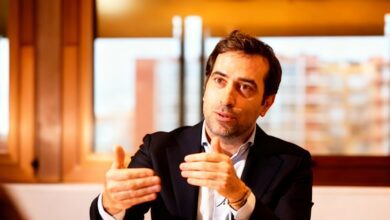
At the center of attention was judge Manuel Ruiz de Lara, who on social network ‘X’ accused Prime Minister Pedro Sánchez of attempting a coup and made disparaging remarks about his wife, Begoña Gómez. The second case concerned judge Eloy Velasco from the National Court, who made sharply critical remarks about former minister Irene Montero at a public event. Both cases triggered widespread public resonance and professional debate.
Commission decision
According to El Confidencial, the CGPJ’s disciplinary commission voted by majority to close both proceedings. Several commission members expressed disagreement, filing dissenting opinions. In Velasco’s case, the inquiry stemmed from his comments on the ‘only yes means yes’ law and criticism of Montero, which he linked to her prior work in a supermarket.
Reaction to these statements was swift: the former minister publicly responded to the judge, stressing the need to observe laws and undergo the specialized training required by international standards. In the end, despite a proposal to impose a fine of up to 6,000 euros, the commission decided not to apply any sanctions.
Public Outcry
In Spain, such decisions often spark discussion not only among legal professionals but also among ordinary citizens. Many view this as a sign of double standards or insufficient transparency in the judiciary. Recalling other high-profile cases, it is worth noting that concerns about fairness and judicial independence are regularly raised in the media and on social networks.
Particular attention was drawn to the fact that the complaint against Judge Velasco was filed by an ordinary citizen, not a politician or a fellow legal professional. This highlights how sensitively society reacts to statements made by members of the judiciary. In similar cases, for example, when the Supreme Court was at the center of controversy due to significant legal fees, as was the case when the prosecution demanded to overturn the recovery of nearly €80,000, public reaction was also mixed.
Context and Consequences
According to El Confidencial, the prosecution supported the decision to close the case against Velasco, while the initiator of the disciplinary proceedings suggested a monetary fine would suffice. In both scenarios, the disciplinary commission opted for no penalty, which could set a precedent for future cases on similar issues.
In recent years, cases in which judges and public officials find themselves at the center of scandals due to their public statements or decisions have become more frequent in Spain. Such situations spark debates about the boundaries of acceptable conduct and responsibility to society. The outcomes of these cases often serve as indicators of public sentiment and attitudes toward the institutions of power.
Recalling recent events, it is worth noting that disciplinary cases against judges are not uncommon in Spain. In 2025, there was a widely discussed incident in which a judge was held accountable for remarks aimed at politicians, while in 2024, the public was actively debating the issue of transparency in judicial expenditures. Stories like these demonstrate that questions of judicial independence and accountability remain relevant and attract keen interest among Spaniards.