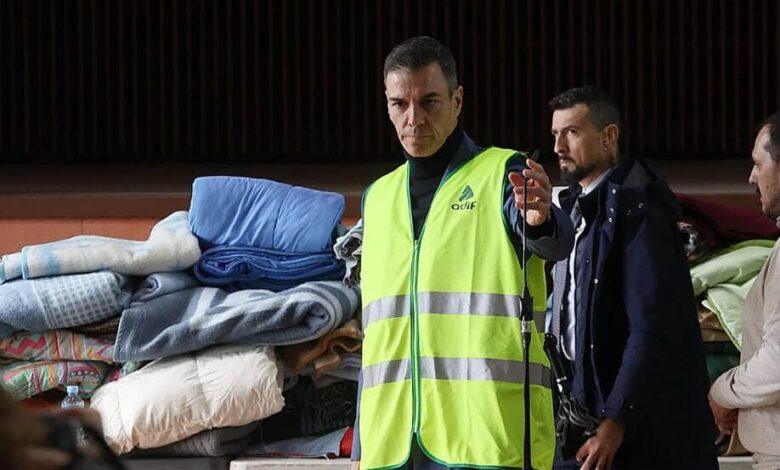
In the first hours after the tragic train accident in Adamuz (Córdoba), Spain was united in grief. Political leaders, usually prone to disagreement, stood side by side this time. Authorities at all levels—from Prime Minister Pedro Sánchez to Andalusia’s Juanma Moreno—gathered in the small town to offer condolences to the families of the victims and to stress that joint efforts and support for those affected are now paramount.
At that moment, the usual political rivalry faded into the background. Words like “unity” and “coordination” were on the lips of representatives from different parties, while officials called for restraint and mutual assistance. Spain and Andalusia declared three days of mourning. The main political forces—the Socialists and the People’s Party—canceled public events so as not to distract from the tragedy or disrupt the atmosphere of mourning.
Party Reactions
In Aragón, almost all parties decided to postpone the start of the election campaign. Only Vox chose to stick to its original plans, continuing its rallies and public events. Their representatives stated they did not intend to pause for even a moment, despite the official mourning period. This move sparked a mixed response, even within the party itself.
Vox leader Santiago Abascal came out with harsh criticism of the government, accusing it of incompetence and corruption. He said the authorities could not be trusted to investigate the causes of the disaster, and that hope rested solely on the professionalism of rescuers and medical staff. However, not everyone in Vox supported such a hardline stance. Some party members, including former Madrid speaker Javier Ortega-Smith, called for unity and respect for the victims, stressing that the time to look for those responsible would come later.
Mourning and solidarity
While Vox continued its campaign, other parties focused on supporting the victims. Members of PP and PSOE traveled to Adamuz to offer condolences in person and take part in moments of silence. In their public statements, they avoided political attacks, emphasizing the importance of restraint and respect in the face of tragedy.
The Andalusian authorities and the central government urged the public to wait for the results of the investigation before discussing possible mistakes or official accountability. Transport minister Óscar Puente highlighted the work of emergency services, stating that the actions of Andalucía’s officials were exemplary. This time, officials were generous with praise toward each other—something rarely seen in Spanish politics.
The nuances of dialogue
However, not all interactions between politicians proceeded smoothly. A scheduled meeting between Sánchez and opposition leader Alberto Núñez Feijóo was cancelled at the latter’s initiative. Following a phone call, both sides agreed to postpone discussions on other issues, including foreign policy. Feijóo also noted that since the tragedy, he had received no additional updates from the government—either as party head or as opposition leader.
This situation underscores that even during times of national mourning, political disagreements do not disappear entirely. Still, this time, most parties and officials managed to set aside their disputes for the common good. The exception was Vox, which chose to go its own way despite public pressure and internal differences.
A test for the nation
The tragedy in Adamuz became a test for Spain’s political system. The authorities and most parties showed they could unite in the face of adversity. Yet disagreements, though muted, did not vanish. Once again, Vox took center stage by opting for confrontation and refusing symbolic gestures of solidarity.
In moments like these, it becomes clear that even the sharpest political rivalries can give way to human solidarity. But not everyone is willing to follow this principle. Spain is closely watching how the situation unfolds—waiting to see if the political landscape will shift after the tragedy and whether the country can preserve the fragile unity that emerged during these trying days.