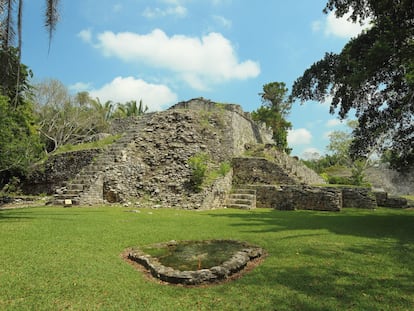
A team of researchers from Spain, including architects and scientists from the Universitat Politècnica de València, took part in a major international project studying ancient Maya cities. During the project, specialists used Lidar technology, which enables scanning of terrain beneath dense vegetation and the detection of hidden archaeological features.
The study analyzed more than 2,600 square kilometers of jungle in the Maya lowlands, covering present-day Guatemala and Mexico. Thanks to Lidar, researchers discovered over 100,000 ancient structures, about a third of which turned out to be buildings with stone vaults—an architectural element traditionally associated with high social status.
Spanish experts, together with colleagues from the United States and other countries, developed a specialized model capable of accurately identifying construction types based on laser scanning data. This approach made it possible not only to classify buildings according to their architectural features, but also to trace how elite and ordinary structures were distributed in Maya cities and rural areas.
The analysis results showed that members of the elite often lived not only in the central areas of cities but also among ordinary residents, including rural settlements. This discovery has provided new grounds to reconsider existing views on the social and economic organization of the ancient civilization. Researchers note that such a distribution of elites may have been related to the need for resource management and exchange.
In addition to residential and public buildings, Lidar technology made it possible to identify complex water management and agricultural systems: terraces, canals, and reservoirs. These findings confirm the high level of planning and advanced infrastructure in Maya cities, and also point to a complex political structure within society.
The use of laser scanning has significantly increased the efficiency of archaeological research. Scientists can now identify the most promising excavation sites in advance, saving both resources and time. Moreover, Lidar opens up new opportunities for the preservation of archaeological heritage, especially in remote and protected natural areas.
The project, supported by the regional authorities of Valencia, has become an example of successful international cooperation and the implementation of modern technology in the humanities. The data obtained are already being used to propose new hypotheses about the daily life and societal structure of the Maya during the Classic Period (250–900 CE).
Experts emphasize that such research not only expands our understanding of the past but also contributes to the development of heritage conservation methods, which is particularly important for regions with a rich history and complex natural environments.