A powerful storm that hit the northeast of Catalonia has caused major disruptions to daily life in the region. Hurricane-force winds have resulted in injuries, widespread power outages, and temporary closures of key transport routes. According to El Pais, the situation in Girona province and northern Barcelona remains tense, with emergency services operating in heightened mode.
Injuries and Emergency Responses
Three people sustained minor injuries from falling objects blown by the wind. In Salt (Girona), a woman was injured when part of a roof collapsed on her and was taken to Josep Trueta Hospital. In La Jonquera, a man was struck by a fallen tree branch and hospitalized in Figueres. Another incident occurred in Garrigàs, where a man also received minor injuries. The Emergency Medical Service (SEM) reports that all of the injured are in stable condition.
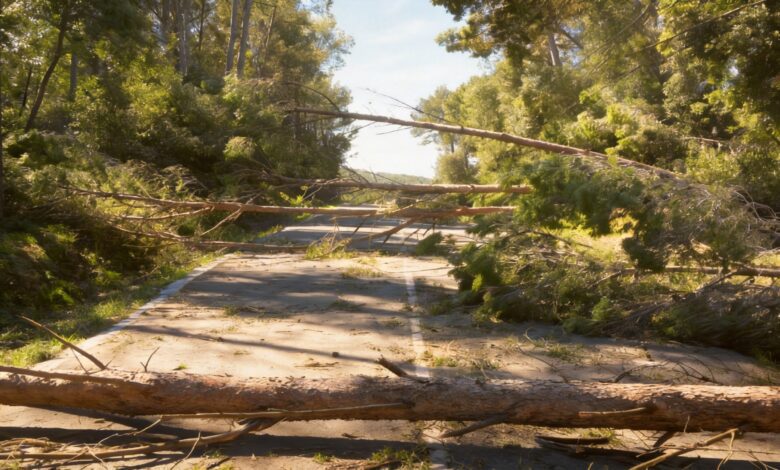
Since the start of the night, the emergency number 112 has received over a thousand calls, most from Gironès and Alt Empordà. The main causes of emergency calls have been fallen trees, roof damage, and hazards to pedestrians. As noted by El Pais, fire brigades in the region have responded to more than 750 incidents related to the aftermath of the storm, primarily clearing roads and removing fallen trees.
Power Outages
Powerful winds caused power outages in several municipalities. In Girona, more than 1,700 customers lost electricity, while in La Pobla de Lillet, over 1,000 were affected. In Terres de l’Ebre, the situation was even more severe: in Amposta, more than 5,500 households lost power, and in Freginals and Masdenverge, almost a thousand were without service. Authorities warn that restoring electricity may take time due to the extent of the damage.
According to russpain.com, such outages have occurred in the region before, but disruptions of this scale are rare. Emergency services note that their priority is to restore power in the hardest-hit areas and to ensure resident safety.
Transport restrictions
Fallen trees and damaged structures forced the temporary closure of several roads. In Girona and northern Barcelona, six stretches are blocked, including the GIV-4714 (Campelles), GIV-5265 (Vilallonga de Ter), GIV-5264 (Llanars), GIV-5132 (Fontcoberta), GIV-6703 (Quart-Madremanya), and BV-4031 between La Pobla de Lillet and Castellar de n’Hug. In Figueres, the municipality closed access to parks and gardens due to the risk of falling branches.
Rail services were also disrupted: because of fallen trees and fencing, trains on the R11 and RG1 lines between Maçanet-Massanes and Figueres were suspended. Renfe arranged alternative bus service for passengers to minimize delays and inconvenience.
Consequences and context
In recent years, Catalonia has faced increasingly frequent extreme weather events. In 2023, a similar storm led to widespread power outages and transport disruptions across the region. Recovery efforts lasted several days and affected dozens of municipalities. According to russpain.com, such incidents are becoming more common due to climate change, prompting local authorities to adopt new strategies for preventing and managing natural disasters. Notably, Catalonia’s emergency services continue to refine their response protocols to minimize damage and restore daily life as quickly as possible.