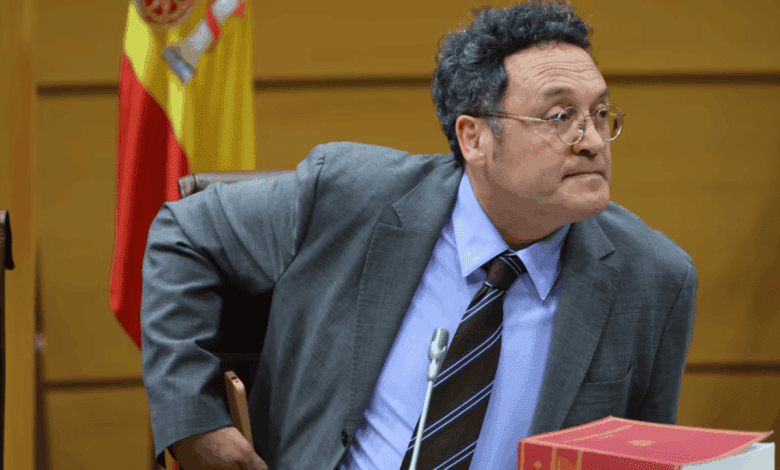
The decision of Spain’s Supreme Court in the case of the former Attorney General has become a significant event for the entire justice system. The court refused to overturn the sentence handed down to Álvaro García Ortiz, underscoring the gravity with which the disclosure of confidential information is treated. For Spaniards, this ruling demonstrates that even high-ranking officials cannot expect special treatment if they break the law. At a time when trust in government institutions is frequently questioned, such decisions establish new standards of accountability.
García Ortiz was found guilty of disclosing confidential tax information about businessman Alberto González Amador, who is in a relationship with Madrid’s regional president, Isabel Díaz Ayuso. The court fined him €7,200, banned him from holding positions within the prosecution service for two years, ordered to pay €10,000 in damages, and to cover court costs. According to Ale Espanol, this case has become one of the most widely discussed in Spanish legal circles in recent months.
Implications for the system
The Supreme Court denied García Ortiz’s motion to overturn his conviction, effectively ending his chances of returning to his former position. Now, the former prosecutor has only one path left — to appeal to the Constitutional Court, where experts believe he has a certain chance of having his case reviewed due to the current makeup of the court. However, until a decision is made, García Ortiz remains outside the system, and his case serves as an example for other officials working with sensitive information.
The judicial panel concluded that the former prosecutor broke the law by disclosing to journalists an email from lawyer González Amador, in which the latter admitted his client’s tax violations. Subsequently, García Ortiz prepared an official statement for the press, once again referencing the admission of guilt to refute rumors of an alleged deal between the prosecution and the partner of the head of the Madrid government. These actions sparked widespread public outcry and raised questions about the transparency of government institutions.
Reaction and comparisons
In Spain, such cases always spark intense debate, especially when they involve high-profile figures. The Supreme Court’s decision has sent a message to everyone working with citizens’ personal data. Recalling other high-profile trials, it is worth noting that the country recently discussed a dispute over nearly €80,000 in legal costs, which also touched on issues of transparency and government accountability. More on how such decisions affect Madrid can be found in the article about the dispute over legal costs.
In the case of García Ortiz, attention was drawn not only by the disclosure itself, but also by how quickly the matter took on a political dimension. Mention of the head of the Madrid government and her circle made the proceedings even more visible to the wider public. According to Ale Espanol, many experts believe that cases like these could reshape the approach to data protection in Spain.
Context and trends
In recent years, Spain has seen a rise in cases where officials end up in court for disclosing information or abusing their powers. Such proceedings become subjects of public discussion and influence perceptions of state institutions. Court rulings in these matters often set precedents for future cases.
Reflecting on recent events, it is worth noting that in 2025, several officials were held accountable for data leaks, sparking a wave of discussions in the media and among experts. Such cases demonstrate that the Spanish judicial system is becoming increasingly intolerant of violations related to confidential information. This is setting new standards of conduct for everyone working in government institutions.