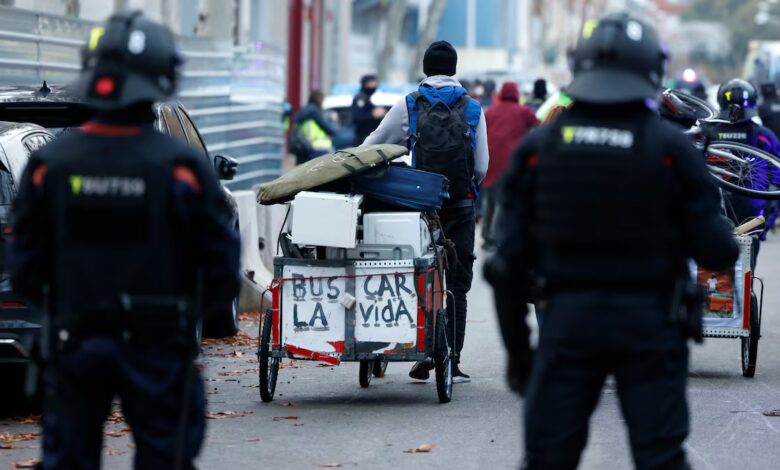
In Badalona, the situation with migrants who had been living in the abandoned B9 institute building escalated after their eviction. City authorities insisted on clearing the premises without offering alternative accommodation. As a result, hundreds of people ended up on the street, many spending several nights under heavy rain, sheltering beneath a highway overpass.
In response to the city council’s inaction, local community organizations and charities teamed up to urgently create temporary shelters for the most vulnerable migrants. On Friday night, the independent center Sala i Pont hosted fifteen people. The CC OO union provided a warehouse for storing personal belongings and charging phones. On Sunday, it was reported that another 15 overnight spots had been prepared at the Montserrat parish, where the Red Cross (Cruz Roja), with support from the Catalonia Department of Social Rights, is organizing aid.
Temporary solutions
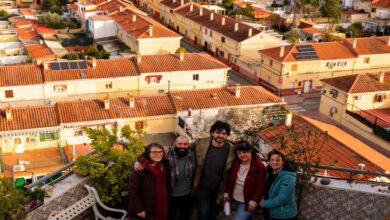
Both new shelters allow migrants to stay from 8 p.m. to 8 a.m. During the day, they have to find other places to stay. Some families in Badalona have taken in young people from among those who were evicted, mostly migrants from sub-Saharan Africa. Volunteers and concerned locals are bringing warm clothes, bedding, and food to support those in need.
The selection criteria for accommodation at the Montserrat parish were strict—priority was given to those in particularly vulnerable situations. Several organizations took charge of the process: in addition to the Red Cross, Caritas, Sant Joan de Déu Serveis Socials, and Fundació Llegat Roca i Pi were also involved. For daytime needs such as showers and laundry, migrants can use the Folre Day Center, which typically serves people experiencing homelessness.
Authorities’ response
The municipality, led by Mayor Xavier Garcia Albiol, took a tough stance. After people were evicted from B9, city officials not only refused to offer assistance, but also banned them from staying near the former school building. The city’s only homeless shelter had previously been closed by the mayor’s decision. It is estimated that of the approximately 400 people who lived in B9, about half left the building before the eviction began. The rest were forced to seek shelter on the streets despite harsh weather conditions.
Caritas temporarily accommodated five former B9 residents in hotels, but this solution is only intended to last a month. The organization notes that it has long been supporting more than 300 people in private homes and another 27 in a temporary accommodation center. These figures are confirmed by the local homelessness coordination group.
Demands to the city
Civil organizations insist that the issue of homelessness and migrants requires a systemic approach from the municipality. Not only emergency measures are needed, but also long-term programs, funding, and coordination with the nonprofit sector and other levels of government. According to Carles Sagués, one of the leaders of Badalona Acull, the current agreements between the Catalan government and civil organizations are merely a temporary solution. He emphasizes that the city must take responsibility for those left on the streets and ensure they have decent living conditions.
For now, it is volunteers and charitable foundations who remain the only support for those left homeless after the eviction from B9. Their efforts offer at least some temporary relief for migrants, but the question of a long-term solution remains unresolved.