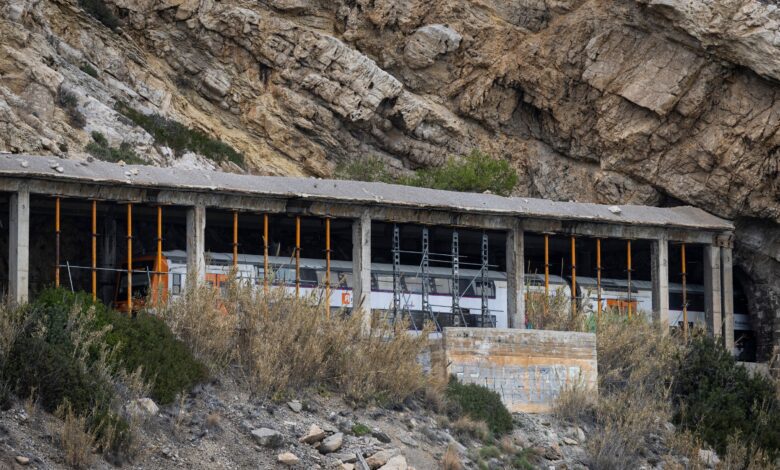
Residents of Catalonia are about to face major changes in the transport system: starting Monday, renovation work begins on the Garraf railway tunnels, set to last three months. The decision comes amid ongoing difficulties on the region’s railways, where the aftermath of the Gelida accident is still being felt. As a result, usual Rodalies routes and timetables will undergo significant changes, affecting thousands of daily passengers.
According to El Pais, the works will impact one of the main lines — R2 sur, which links Sant Vicenç de Calders with França station via Vilanova i la Geltrú, Castelldefels, El Prat de Llobregat, Bellvitge, Sants, and Passeig de Gràcia. Regional trains from Cambrils and Tortosa to Barcelona will also be affected. Authorities in Catalonia, Adif, and Renfe have agreed on a new plan: between Sitges and Garraf, R2 sur trains will run on a single track, cutting the number of services on this stretch by nearly half.
Train reductions and new routes
During rush hours, there will be eight trains per hour in each direction between Barcelona and El Prat de Llobregat, six between Barcelona and Castelldefels, and four between Barcelona and Garraf. Between Barcelona and Sant Vicenç de Calders, two trains per hour will operate, but their capacity will be doubled. For regional routes, a direct bus service is set up between El Prat de Llobregat and Sant Vicenç de Calders, while the Barcelona — Sant Vicenç de Calders — Tarragona/Reus/Lleida/Tortosa/Port Aventura section will keep its usual rail service.
On weekdays, two trains in the morning and two in the evening will operate via the R4 line, passing through Vilafranca del Penedès, which will increase travel time by approximately 40 minutes. Starting Monday, double train service is expected on the R4 through Gelida. According to El Pais, these measures are necessary to ensure safety and update infrastructure that train drivers consider outdated and potentially dangerous.
Buses and additional capacity
The Generalitat has increased the number of intercity buses, adding 14,400 seats during the repair period. This will partially offset the reduction in train service and ease the load on the remaining trains. Authorities emphasize that all changes are coordinated according to the current transport situation and the ongoing crisis following the accident in Gelida.
Disruptions on Catalonia’s railways are not new. Recently, strong winds and repairs have already led to train cancellations and bus transfers, while train driver strikes have only made the situation worse. More details on how weather and repairs affect Rodalies can be found in the article on the recent disruptions in Catalonia’s railways.
Context and consequences
The repair of the Garraf tunnels became a necessary measure due to their wear and age. According to experts, the condition of the tunnels raised concerns among train operators and required urgent intervention. The introduction of new bus routes and adjustments to train schedules are steps aimed at minimizing inconvenience for passengers, although it won’t be possible to avoid delays and transfers completely.
In recent years, Catalonia’s rail network has repeatedly faced accidents, collapses, and technical failures. For example, last year a collapse on the R4 line in Sant Feliu led to prolonged disruptions and mass transfers to buses. An analysis by russpain.com indicates that such situations are becoming more frequent, and the infrastructure urgently needs large-scale modernization. The introduction of temporary routes and increased bus service are forced responses to the region’s chronic rail problems.
Looking back at recent events, it’s worth noting that disruptions on Rodalies have occurred both due to weather disasters and technical failures. In 2025, heavy rains and landslides had already led to temporary closures of railway sections between Barcelona and coastal towns. Passengers also had to switch to buses during that time, and the restoration of service dragged on for weeks. Such cases highlight the vulnerability of Catalonia’s transport system and the need for regular investment in infrastructure upgrades.