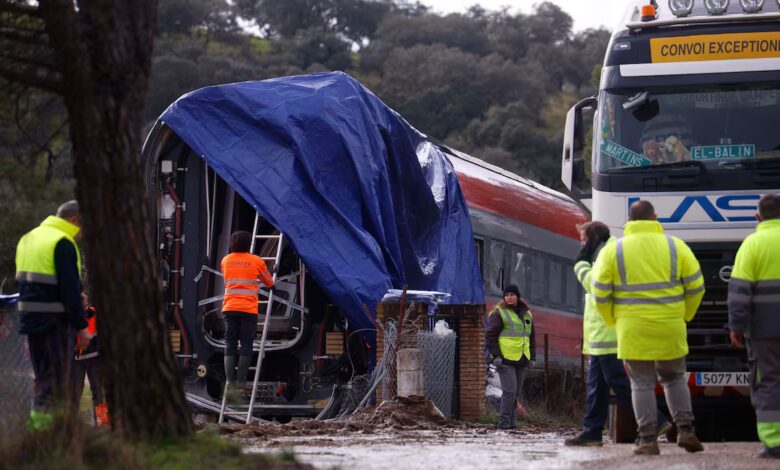
The Huelva train station welcomes visitors not with its usual bustle, but with silence and flowers. On the floor by the glass doors lie white daisies and a humble cardboard box. No one knows who left them, but no explanation is needed: the city is frozen in mourning. Two days earlier, the entire region was shaken by shocking news—the last Sunday Alvia train, habitually delayed as it traveled from Madrid, never made it home. On the tracks near Adamuz, a small town in Córdoba, what is now called the darkest day in Huelva’s history occurred.
This train is more than just transportation. For many, it symbolizes homecomings, trips to visit friends, family gatherings after football matches or theatre premieres. In every home, in every village across the province, there is someone who has taken this route at least once or waved goodbye to loved ones on its platform. Now, the names of the victims are part of every conversation, and the number of casualties among Huelva residents grows by the day.
The city in mourning
Tuesday morning brought more losses: the death toll from Huelva reached 28. For locals, these are not just numbers—each name is a familiar face, a neighbor, a friend, a colleague. The city’s mayor, Pilar Miranda, makes no effort to hide her emotions, calling this the most devastating tragedy in Huelva’s history. That fateful evening, she learned of the disaster from a colleague whose family was on the train. Within minutes, relatives of passengers gathered at the station, but there was almost no information. People rushed about searching for any news, while anxiety and despair hung heavy in the air.
An unusual silence reigns in local newspaper offices: journalists are losing loved ones, friends are learning of acquaintances’ deaths. For many staff members this is not just professional news — it’s a personal tragedy. Among the victims are well-known city residents, teachers, photographers, entire families. Social media is filled with photos, memories, and words of support. But no words can ease the pain of loss.
Personal stories
The tragedy has touched every corner of the province. In Gibraleón, people were waiting for José María Martín, a passionate motorcycle enthusiast and lover of religious processions, to return. In Lepe, the young English teacher Míriam Alberico never made it home after a weekend with her loved one. In Aljaraque, the Zamorano family lost several members at once, with only the youngest daughter surviving. Huelva mourns Ricardo Chamorro, who was accompanying his students to exams in Madrid. His friend, a former prison director in Ceuta, still can’t believe what happened, recalling holidays and trips they shared.
In every neighborhood, every café and shop, people are talking about only one thing — how could this happen. In schools and kindergartens, teachers and psychologists are holding emergency meetings to explain to children why their classmates won’t be coming to class anymore. Experts advise not to hide the tragedy but to talk about it openly, choosing words appropriate to the children’s age, and organizing symbolic farewells to help them cope with the loss.
The lost and the survivors
Among the survivors is Concha Sánchez, a retiree who was traveling with her family to Madrid for a musical show. She recalls how, in an instant, the train was plunged into chaos: thunderous noise, screams, pain. Her relative was seriously injured, while Concha herself escaped with bruises. Now, she says she’ll keep her ticket as a memento—a reminder of a miracle, and of the price of life.
In Isla Cristina, residents gathered for the funeral of two women—a mother and daughter—who were on their way to exams. The church was packed, the streets silent. After a short service, a choir performed a song in their honor, and the family’s father, fighting back tears, thanked locals for their support. At the Huelva station, white roses were added to the daisies, and railway staff handed over survivors’ belongings to the victims’ families.
A city without peace
No one in Huelva remains indifferent. Each day brings new stories, new names, new tears. Authorities, doctors, teachers, and ordinary people all search for words of comfort, but never find enough. The city lives in expectation of news, in hope for a miracle, in fear of the unknown. In cafés and on the streets, people discuss not only the causes of the disaster, but how to go on. A sense lingers in the air: life will never be the same.
While some quietly bring flowers to the station, others gather in churches and squares to share their pain. In Huelva, not a single name or story is forgotten. And with each new day comes the question: why did this happen to us