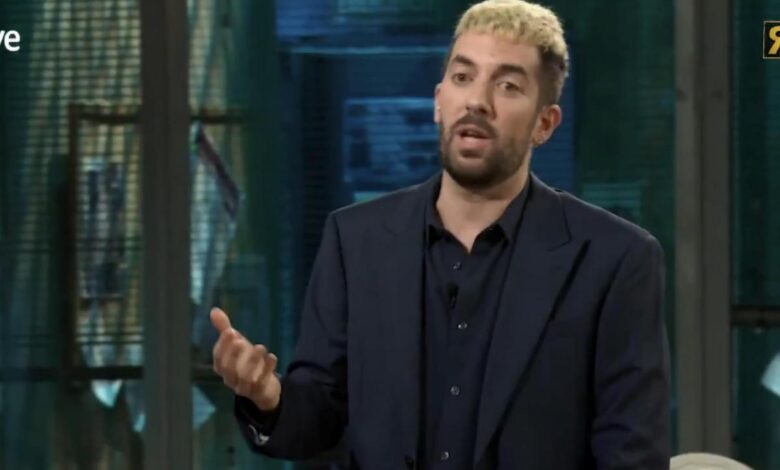
The discussion of women’s rights in Afghanistan has once again become the focus of Spanish society following an unexpected incident on television. David Broncano, host of La Revuelta on TVE, opened the program with a public apology for the recent live broadcast from Kabul, in which not a word was said about the situation of women in the country. This moment sparked a wave of criticism, including from well-known journalist Julia Otero, and ignited a broad debate about the media’s role in covering urgent international issues.
The controversy erupted after an interview with surgeon Diego González Rivas, who works in Afghanistan. During the 15-minute broadcast, not a single woman appeared on screen, and the hosts did not address their rights or status. Julia Otero sharply criticized this omission in her radio show, noting that in Kabul, women seem not to exist, and the hosts’ silence only reinforced the normalization of this reality. Her remarks provoked a heated response on social media and among fellow journalists.
Reaction and consequences
In response to the criticism, the La Revuelta team chose not to remain silent about the issue. In the very next episode, David Broncano acknowledged the mistake and emphasized that failing to mention women’s rights in Afghanistan was an oversight. He noted that although there was a brief remark about the country’s dire situation, the topic of women’s rights went unaddressed, which is unacceptable in today’s world.
For a more in-depth discussion, a specialist from Amnesty International on Afghanistan was invited to the studio. The expert spoke about the real situation faced by women after the radical regime came to power: bans on education, restrictions on movement, and an almost complete disappearance from public life. This step was seen as an attempt to correct a mistake and draw attention to an issue often ignored even by major media outlets.
Impact on public opinion
The La Revuelta incident sparked discussion not only within professional circles but also among the general public. Many viewers noted that such apologies on television are rare and expressed hope that this example would serve as a lesson for other journalists. Social media saw a debate about the importance of not sidestepping topics related to human rights violations, even if they are uncomfortable or difficult to discuss live on air.
Interestingly, such situations have caused a public outcry in Spain before. For instance, at a recent literary award ceremony, a writer delivered a sharp critique of social policy, which also ignited heated discussions and debates. You can read more about this case in the article about the public speech by the writer at the award ceremony, where issues of social justice and equality were also at the center of attention.
The role of the media and experts
The appearance of an Amnesty International expert in the La Revuelta studio marked an important step in raising audience awareness. The specialist gave a detailed account of how living conditions for women in Afghanistan have changed in recent years, and why the international community should not remain indifferent. This approach not only helped correct the mistake but also expanded the scope of the discussion, making it more meaningful and in-depth.
The host emphasized that surgeon Diego González Rivas visits Afghanistan solely on a humanitarian mission, operating on those whom local doctors are unable to help. However, even in such cases, it is important not to lose sight of the broader context and not to ignore the problems affecting millions of people. This episode served as a reminder that journalism carries the responsibility of shaping public opinion and cannot afford to remain silent on key issues.
Context and similar cases
In recent years, Spanish media have increasingly faced criticism for not paying enough attention to international topics related to human rights. This is especially evident in situations involving women in countries with severe restrictions. Public apologies and the invitation of experts are becoming more common, reflecting a growing sense of responsibility and self-reflection within the journalistic community.
Similar incidents have occurred before—for example, after covering protests in Iran or discussing the situation of women in Saudi Arabia. Each time, such episodes spark widespread debate and prompt newsrooms to reconsider their approach to sensitive topics. As a result, public pressure leads to more open and honest dialogue, gradually changing media standards in Spain.