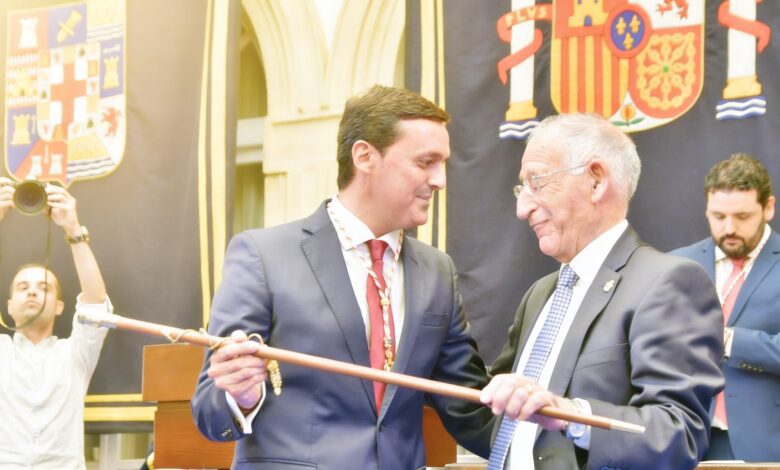
Attention to the transparency of officials’ financial transactions is increasing in Spain following new information on the corruption case in Almería. The scandal centers around former president of the local Diputación, Javier Aureliano García Molina, whose actions, according to investigators, could set a precedent for revising financial oversight in government bodies. As reported by El Pais, the UCO investigation uncovered a complex scheme in which the politician’s relatives were used to transfer cash with unclear origins.
According to El Pais, police found that the mortgage on García Molina’s property was not paid from his personal accounts but through a bank product registered to his sister, María Rosario, and their parents. These accounts were regularly topped up with cash whose origin could not be determined. Investigators believe this scheme allowed for the legalization of funds allegedly received for facilitating contracts to supply medical goods during the pandemic.
Family transfers and banking operations
The UCO also recorded suspicious transactions involving the community of Juan Carlos García Molina, the ex-president’s brother. Investigators claim that funds moved through his accounts, eventually ending up in other family financial products. This involved networks of transfers, making it difficult to trace the real source of the money. Case files note that not a single mortgage payment was made directly from García Molina’s personal accounts, further fueling suspicions of money laundering.
During searches at the politician’s sister’s home, authorities found an envelope containing a large amount of cash labeled as belonging to García Molina. This detail became one of the key arguments in the investigation, confirming the use of family members to conceal financial flows. According to RUSSPAIN.COM, such schemes are becoming increasingly sophisticated, making stricter oversight of officials’ banking operations necessary.
Travel at public expense
The second aspect of the investigation concerns the use of public funds for personal purposes. The UCO established that García Molina, along with his chief of staff María del Mar González, took a trip to Madrid that was paid for from the budget of the Diputación Provincial de Almería. Officially, the trip was explained as participation in a Federation of Municipalities and Provinces meeting, but investigators found no evidence they attended any official event. Investigators believe the trip was purely personal and that supporting paperwork was prepared retroactively.
This episode has fueled additional criticism of oversight mechanisms governing public spending. In recent years, cases have increased in Spain where officials have used their positions to finance personal trips and purchases. Such stories resonate with the public and are widely discussed by media and in parliament.
Context and consequences
In the court decision authorizing the detention of García Molina, particular attention was paid to the use of cash and the lack of transparency in financial transactions. The judge noted that such operations seem suspicious for a public official, especially against the background of regular cash deposits into relatives’ accounts. An envelope containing €7,620 with a note indicating the money belonged to the ex-president was found at the sister’s house, which became one of the pieces of evidence in the case.
The situation in Almería is reminiscent of other high-profile corruption cases in recent years. For example, managers from the Pujol family recently revealed details about cash transfers to Andorra, which also sparked wide discussion among the public and experts. More about similar schemes can be found in the article about cash transfers via Andorra.
Fact sheet: Corruption schemes in Spain
In recent years, Spain has faced a series of investigations related to money laundering and misconduct among officials. Special attention is given to schemes involving relatives and complex banking operations to conceal the origins of funds. Such cases usually lead to tougher legislation and increased oversight of financial flows within government structures. The growing interest in the topic is linked to a rise in detected cases and public demand for greater transparency in the work of authorities.