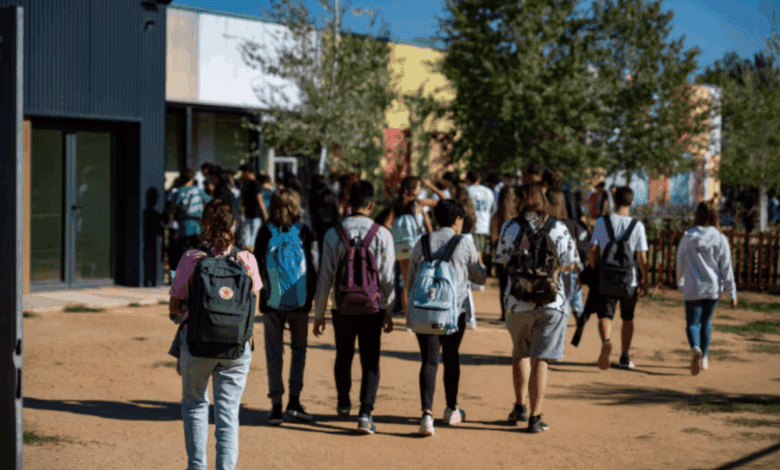
Barcelona’s education system has undergone significant changes: in July 2025, the board of trustees overseeing 18 parish schools in the archdiocese was completely renewed. Unlike the previous board, which was dominated by moderate members, the new majority now consists of representatives from ultraconservative Catholic groups such as Opus Dei, Legionarios de Cristo, and the Catholic Association of Propagandists (Asociación Católica de Propagandistas). This shift has sparked concern among teachers and parents, who fear the schools may adopt a more insular and conservative direction.
The foundation that unites these schools was established back in 1985 to support educational institutions in low-income areas of Barcelona and its suburbs. Among them are schools like Tecla Sala in L’Hospitalet de Llobregat, Sant Josep Oriol, and Sant Ramon Nonat in Barcelona itself. These schools have always stood out for their social focus and openness to children from diverse backgrounds. However, after the recent charter reform, the number of board members nearly doubled, and the presidency was assumed by Montse Durany Pich, a member of a family closely linked to Opus Dei.
A radical shift: causes and consequences
Previously, the board consisted of seven people who were unaffiliated with political parties or religious groups. Now, out of 13 members, only three are holdovers from the previous board, while the rest are active participants in ultraconservative Catholic organizations. Among them are Raül Adames, head of the CEU school network, and Miriam Buxó, responsible for pastoral work at Real Monasterio de Santa Isabel, a school associated with Legionarios de Cristo.
Many in the progressive circles of the archdiocese believe these changes could lead to increased religious pressure on students and teachers. In their view, the new council members aim to make religion a central part of the educational process, turning the schools into a model for a new wave of evangelization. Some have even called the events a ‘coup,’ voicing fears that the schools will fall under the control of far-right Catholic movements.
Response from the Archdiocese and Religious Organizations
Official representatives of the archdiocese explain the changes as the necessary renewal of the council due to the age of its previous members. They state that the decision was approved by Auxiliary Bishop Javier Vilanueva, and that the foundation will continue to serve the interests of the students. However, the leadership refuses to comment on any possible ideological shift.
Opus Dei, for its part, claims to have no official ties with the parish schools, saying that the participation of some members in the council is their personal initiative. Nevertheless, many within the archdiocese are convinced that the leadership change is aimed at radicalizing educational policy and increasing religious influence on children.
Potential Changes in the Educational Process
Teachers and parents note that so far there have been no noticeable changes in schools. However, teachers involved in pastoral work warn of a possible return to more traditional forms of religious instruction. Until now, schools have shown flexibility, respecting the diversity of students’ faiths without imposing religious practices.
Supporters of the new course believe that Christian schools should become centers of religious upbringing and boost church attendance. They argue that the current situation—where a third of the region’s schools are designated as Christian but the churches remain half-empty—demands change. They insist that religion should become the foundation of the entire education system.
Trends in other regions and the future of schools
A similar situation is unfolding in other parts of Catalonia, where ultracatholic movements like Comunión y Liberación and Camino Neocatecumenal have already begun to influence schools. In some institutions, such as Mare de Déu del Carme in Terrassa, Liceu Politècnic in Rubí, and Santa Isabel in Sant Cugat del Vallès, this has triggered protests from parents and students.
In Barcelona’s parish schools, changes are only just beginning to emerge. Teachers report that the atmosphere within the staff remains the same, but many expect the focus on religious education to intensify in the near future. Parents and educators are closely monitoring the situation, concerned that schools may lose their social and inclusive character.