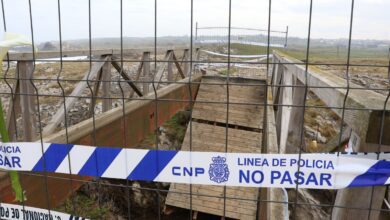
An incident in Belorado (Burgos) has sent a clear message to Spain’s religious communities: former nuns, once part of the Catholic Church, left their monastery at night to avoid forced eviction. Their decision followed a court’s refusal to grant them an extra month to find new accommodation. The situation highlights how quickly circumstances can shift for religious groups outside official structures.
Nighttime evacuation
According to El Confidencial, the former nuns left at 2:46 a.m., when ex-abbess Laura García de Viedma symbolically extinguished the last candle on the altar and turned off all lights in the building. This move came just hours before the deadline set by the Briviesca court, after which forced eviction would have begun. By morning, lawyers representing the former nuns were expected to hand over the monastery keys to the court commission.
The move marks the end of a long conflict that began in May 2024, when the group announced its departure from the Catholic Church. That decision led to their excommunication for schism, a rare event in modern Spain. In recent days, the women actively packed up their belongings, despite the court’s refusal to extend their stay at the monastery.
Looking for shelter
The relocation of the former nuns has been organized in two directions: some went to the Orduña monastery (Bizkaia), while others moved to a town in the Toledo area, where one of the women has family ties. According to El Confidencial, this is a temporary solution until a permanent place to live is found. Since early February, the former nuns have received around thirty offers from individuals and organizations willing to provide housing or property for their community.
The move was carefully planned to avoid public conflict and possible police intervention. According to spokesperson Francisco Canals, the women are counting on the support of those who responded to their campaign for a new home. In the coming weeks, they will review the offers to choose the most suitable option for long-term residence.
Reaction and consequences
The story of the former nuns from Belorado has sparked widespread discussion among believers and secular residents across Spain. Many are debating how cases like this could affect attitudes toward religious institutions and their internal regulations. The court decision to evict them has become a matter of controversy, as it involves not only property issues but also the right to freedom of religion and the autonomy of religious groups.
In recent years, Spain has seen a growing number of cases where religious communities encounter legal challenges due to legislative changes or internal conflicts. For example, recent transport restrictions caused by severe weather led to the cancellation of train services between Valencia and Catalonia, which also posed an unexpected challenge for local residents and organizations— details on the impact of the transport collapse can be found in the article at russpain.com.
Context and similar cases
In recent years, Spain has faced a rising number of conflicts between religious organizations and government bodies. Evictions linked to property disputes or changes in community status have taken place across different regions of the country. For instance, in 2025, a group of former monastery members in Galicia was also forced to leave the building following a court decision. In Andalusia, a similar situation arose due to disagreements over the use of church property. These cases illustrate that issues of autonomy and the rights of religious groups remain pressing and call for new solutions at both legislative and societal levels.