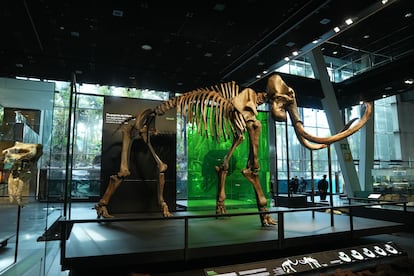
The long-awaited installation of one of the most impressive exhibits in recent years—a woolly mammoth skeleton—has been completed at the CosmoCaixa Museum in Barcelona. This specimen, assembled from the bones of three different animals, now takes center stage in the hall dedicated to evolution and has already become a major attraction for visitors.
The skeleton, which measures six meters in length and stands three and a half meters tall, was discovered in the permafrost of Russia’s Tyumen region. After a complex process of transport and restoration, it was purchased by the museum for a substantial sum and was displayed at exhibitions in several Spanish cities, including Sevilla, Zaragoza, Madrid, Palma, and Tarragona. During its journey, more than 300,000 people viewed the exhibit, and now it has found a permanent home in Barcelona.
The mammoth as part of human history
Woolly mammoths, close relatives of modern elephants, once roamed vast areas of Eurasia and North America. Their remains have inspired artists and writers, and helped scientists piece together details of life during the Ice Age. Genetic studies have revealed that mammoths were highly developed members of the elephant family, and their adaptations to the cold are remarkable: thick fur, a heavy layer of fat, short ears and tails—all of which helped them survive in harsh conditions.
Interestingly, mammoths were not only hunted by ancient humans, but also served as a source of materials for building shelters, making clothes, and even creating works of art. In some regions, entire huts built from the bones and hides of these giants have been discovered. Their tusks were used for carving and decoration.
An exhibit with history and a future
The CosmoCaixa skeleton is assembled from the bones of three individuals estimated to be 40,000–50,000 years old. Thanks to excellent preservation, visitors can examine the animal’s anatomical details and learn about its lifestyle and reasons for extinction. The museum has already launched a series of events dedicated to the new exhibit: themed tours, educational programs for children and adults, and interactive lectures about mammoths and their role in human history.
Special attention is given to how mammoths were depicted in cave paintings, as well as the myths and legends that have grown up around these animals. CosmoCaixa even plans to hold a vote among visitors to choose a name for the museum’s new ‘resident.’ Next to the exhibit, a screen shows the skeleton’s assembly process and explains the challenges paleontologists face when searching for and transporting such finds.
The mammoth — not just a creature of the past, but also the future of science
Today, interest in mammoths remains strong: scientists around the world are discussing the possibility of ‘bringing back’ these animals using modern biotechnology. At CosmoCaixa, visitors can learn about the latest attempts to recreate the mammoth from DNA, as well as how such projects might impact the future of ecology and science.
The arrival of the mammoth at CosmoCaixa has become more than just a new addition to the collection—it’s a real event for Barcelona and all of Spain. The exhibit is already being called the museum’s new calling card, and its story is a good reason to reflect on the connection between past and future. Now everyone has the opportunity to see this legendary giant with their own eyes and discover how it changed the course of human history.