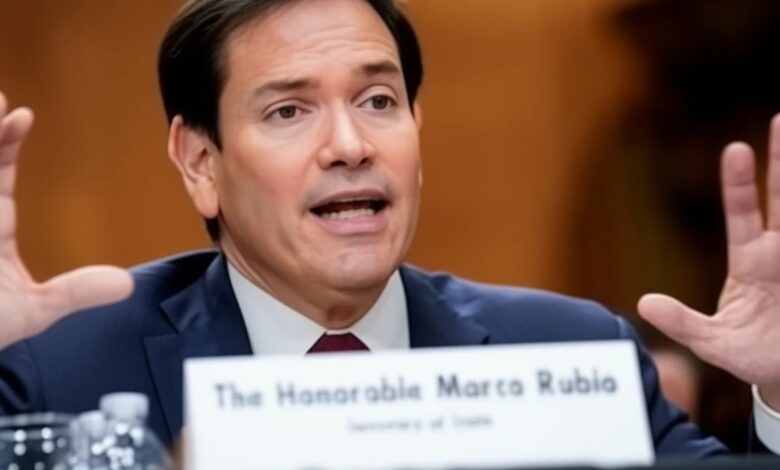
Spaniards are no strangers to seeing their political experience attract close international attention. This time, Spain’s Transición—the transition to democracy after the death of Francisco Franco—has become central to a heated debate over Venezuela’s future. US Secretary of State Marco Rubio, speaking at a Senate hearing, unexpectedly cited the Spanish path as one of the key historical benchmarks for the Latin American country amid its deep political crisis.
For Spain, this is more than a matter of historical memory. The comparison with Venezuela highlights how significant the Spanish experience remains for countries seeking a way out of autocracy. As Europe and Latin America face new challenges, such parallels take on added urgency. Unsurprisingly, the American diplomat’s statement sparked intense reactions in Spanish and international media.
Parallels and Expectations
During the discussion of US policy toward Venezuela, it was noted that change takes time and reforms demand patience. According to the official, Spain’s Transición became an example of how gradual changes and compromises among opposing forces can lead to a stable democracy. He emphasized that Spain’s path was neither fast nor easy, marked by tough negotiations and periods of uncertainty.
Venezuela, he said, is on the verge of similar processes. However, the diplomat stressed that immediate results should not be expected. Even in Spain, where new institutions were established after decades of dictatorship, change took years. In Venezuela’s case, he estimates, the first tangible shifts should become evident within several months; otherwise, the situation risks remaining deadlocked.
Power and Change
Special attention in his speech was given to the issue of control over security forces and state institutions. The American official noted that these very factors determine the speed and depth of any transformation. In Spain, the key moment was the transfer of control from the old elites to new democratic bodies. In Venezuela, he said, power remains concentrated in the hands of the regime, which significantly complicates any attempts at reform.
At the same time, the diplomat expressed cautious optimism: if signs of real change appear in the next six months, a new phase could be said to have begun. He linked these expectations to the presence of American diplomats on the ground, which, in his view, will allow for a more accurate assessment of the situation and adjustment of strategy.
The Role of the Opposition and Unexpected Incidents
The opposition was also mentioned in the context of possible changes in Venezuela. Particular attention during the discussion was given to María Corina Machado, Nobel Peace Prize laureate. The American diplomat acknowledged that she could play a significant role in the transitional process, though he did not elaborate on details.
The Senate hearings were not without incident. During the official’s speech, one of the audience members shouted an anti-U.S. intervention slogan regarding Venezuela and held up a poster with a similar message. Security officers immediately escorted him from the hall, and the chair of the Foreign Relations Committee warned of disciplinary action. This episode only heightened the tension and underscored how sensitive the issue of interference in other countries’ internal affairs remains.
Spanish experience under the microscope
In Spain, comparisons with Venezuela are viewed ambiguously. For some, it is a source of pride: the Spanish Transición truly became an example of a peaceful transition to democracy. For others, it is a reminder of the challenges and compromises that accompany any reform. Debates continue in social networks and among experts: is the Spanish model applicable to Latin American realities, or are the differences too great?
Meanwhile, attention to Spain’s experience remains strong. As the world once again debates ways to overcome political crises, Spain finds itself at the center of the global dialogue. And, as the recent scandal in the US Senate shows, this discussion is far from over.