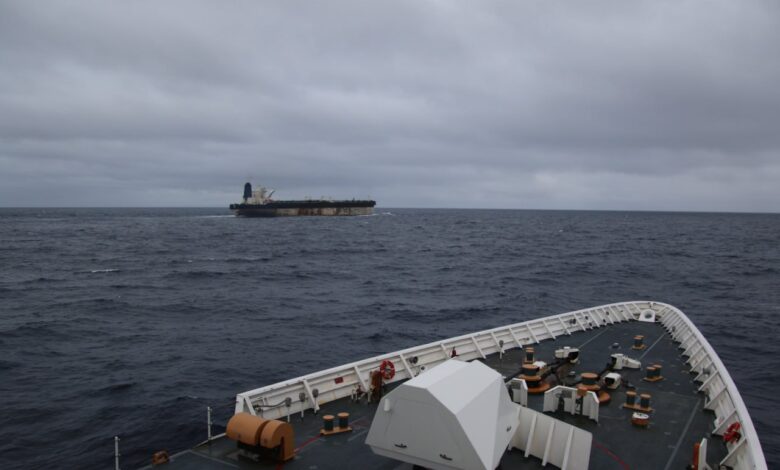
A real maritime drama unfolded in the Atlantic: the US military intercepted a Russian oil tanker that was attempting to break through to the shores of Venezuela, defying sanctions and a blockade. For nearly three weeks, the vessel evaded pursuit but was ultimately detained without a single shot fired. The operation went smoothly—the crew offered no resistance, despite heightened tensions in the region.
This incident marked yet another escalation in the standoff between the US and Russia, and added further pressure on Venezuela, where the situation remains highly unstable after a recent change of power. The Americans have made it clear: their goal is to completely cut off oil supplies from Caracas and deprive the new regime of financial support. Moscow, meanwhile, responded to the vessel’s detention with restraint, stating the tanker had acted strictly within international maritime law and calling the actions of the US and NATO excessive and provocative.
The Spanish position
Madrid was quick to respond. Spain’s Foreign Minister José Manuel Albares reminded Washington that Venezuela’s natural resources belong solely to its people. He stressed that Spain is ready to act as a mediator in resolving the crisis but does not accept outside pressure or violations of sovereignty. Albares also assured that Spanish companies operating in Venezuela have not yet felt any serious impact from the recent events, but authorities continue to closely monitor the situation and support business interests.
Economy Minister Carlos Cuerpo has confirmed that around 60 Spanish companies, including major players such as Telefónica, Repsol, BBVA, Mapfre, and Inditex, continue to operate in the country. So far, none of them has reported any significant problems, but authorities in Madrid admit the situation could change at any moment. The Spanish government has pledged to stay alert and provide support to its companies.
International response
In Caracas, interim president Delcy Rodríguez, who assumed office following the arrest of Nicolás Maduro by US forces, delivered a tough statement. She made it clear she would not submit to external demands, stressing that only God determines her fate, not foreign leaders. Meanwhile, Donald Trump announced that Venezuela has agreed to transfer between 30 and 50 million barrels of oil to the United States, worth about $2 billion. He said the resources would be sold on the American market, and the proceeds would benefit the people of both countries.
Argentina, represented by President Javier Milei, supported US actions, stating that Washington does not seek to seize Venezuelan oil but aims to reshape the global order and put an end to ‘deadly socialism’ in the region. In Europe, however, opinions were divided. Belgian Prime Minister Bart de Wever approved Maduro’s arrest but expressed doubts about the methods used to achieve it. France, meanwhile, is preparing countermeasures should the US attempt to exert pressure, especially in light of American interests in Greenland.
Visa barriers
Meanwhile, US authorities have tightened visa regulations for citizens of Venezuela and Cuba, adding them to the list of countries whose residents must now provide large deposits when applying for tourist and business visas. The new requirements also affect 25 other countries, mainly in Africa, and will come into effect in the coming weeks. This decision has sparked a wave of criticism, especially among Latin American diasporas in Spain.
China has not stood aside either: Beijing strongly condemned US attempts to force Venezuela to sever economic ties with Russia and China in exchange for access to oil resources. According to Chinese diplomats, Caracas has the full right to manage its wealth and choose its partners independently.
A Spanish perspective
Madrid maintains its position: any change in Venezuela must occur exclusively through peaceful means and dialogue among Venezuelans themselves. Spain stresses that respect for international law and state sovereignty is the only path to stability in the region. Authorities regularly emphasize that Europe and Latin America must stand together to uphold the principles of justice and equality, rather than give in to outside pressure.
However, not everyone in Spain is in agreement. Madrid Mayor José Luis Martínez-Almeida acknowledged that the way Maduro was detained was far from ideal, but noted that now the world has one less dictator. He also pointed out that the views of some Spanish foundations and parties do not always align with the official government position.
An Oil Chess Game
The situation surrounding Venezuela and its oil reserves has become a genuine geopolitical chess match, with each side trying to outmaneuver the other. Spain, despite pressure from the US and internal disagreements, continues to uphold principles of dialogue and respect for sovereignty. The question of who will ultimately win this game remains open—but one thing is clear: the stakes are extremely high, and Spain has no intention of sitting on the sidelines.