Valencia’s economy faces new challenges due to instability in the Middle East. Decisions made by the regional government will directly impact hundreds of companies and thousands of workers whose activity depends on international markets and stable supply chains. As the effects of the war in Iran intensify, regional authorities have announced the launch of a large-scale support program.
According to El Pais, President Juanfran Pérez Llorca has introduced a new €100 million credit line for businesses affected by the economic fallout from the conflict. These funds will become available through the Valencia Finance Institute (IVF) in the coming days. The main goal is to provide liquidity to companies facing supply disruptions, rising fuel prices, and reduced export opportunities.
In addition to loans, subsidies are planned for self-employed professionals in transport, logistics, delivery, and fishing sectors. The exact amount of support for these groups will be determined soon, but priority will go to those whose work is directly tied to the use of transport and fuel. Authorities have also promised to waive fees for participation in international trade fairs and business missions for companies most vulnerable to external shocks.
Additional measures
As part of the anti-crisis package, there are plans to review the terms of the Inpyme program and make the rules for granting support to enter foreign markets more flexible. This aims to help businesses adapt to new conditions and reduce risks related to international operations. In addition, there is discussion about raising the maximum sale price for social housing to support the construction sector.
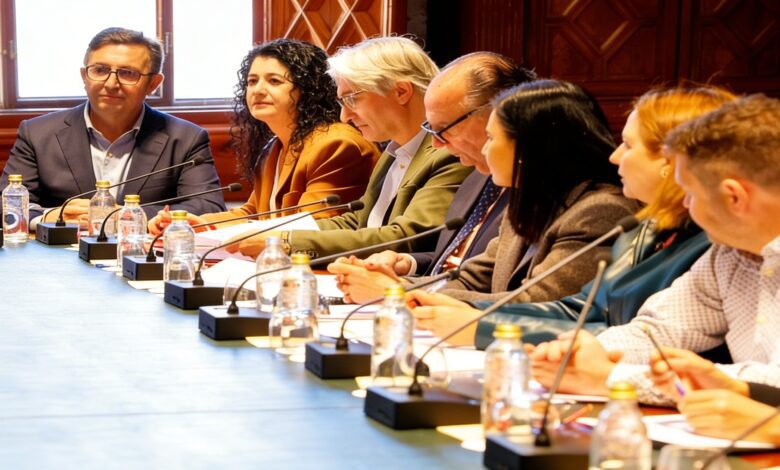
According to Perez Llorca, total support will exceed 350 million euros, including existing tax breaks. Such a broad approach is explained by the need to respond quickly to changing circumstances and prevent mass job losses. Representatives of business associations and trade unions who attended the meeting at Palau de la Generalitat supported the initiative, emphasizing the importance of coordination between the state and the private sector.
At the same time, as El Pais reports, regional authorities are preparing to appeal to the new Finance Minister Arcadi España for additional support. Issues related to disaster recovery, granting emergency loans, and creating a temporary equalization fund remain unresolved. Perez Llorca stressed that having a minister from Valencia opens up new opportunities for dialogue and compromises on key issues.
Context and Outlook
Experts note that similar measures have already been implemented in other regions of Spain in response to external crises. For example, in Catalonia, additional spending on education and raising teachers’ salaries was recently discussed, sparking lively debates among politicians and trade unions. Details on how budget funds are allocated and the demands from various parties can be found in the article on the debates surrounding Catalonia’s budget.
In recent years, Spanish regions have increasingly faced the need to quickly respond to external challenges, from the pandemic to energy crises and international conflicts. In 2024, similar credit programs were launched in Andalusia and Galicia, where businesses also felt pressure from rising raw material prices and supply chain disruptions. Experience shows that timely support helps preserve jobs and stabilize local economies.
As global events directly impact regional markets, the role of local authorities in ensuring resilience is becoming increasingly important. The decisions being made today will determine not only short-term prospects but also the long-term development of Spain’s key economic sectors.