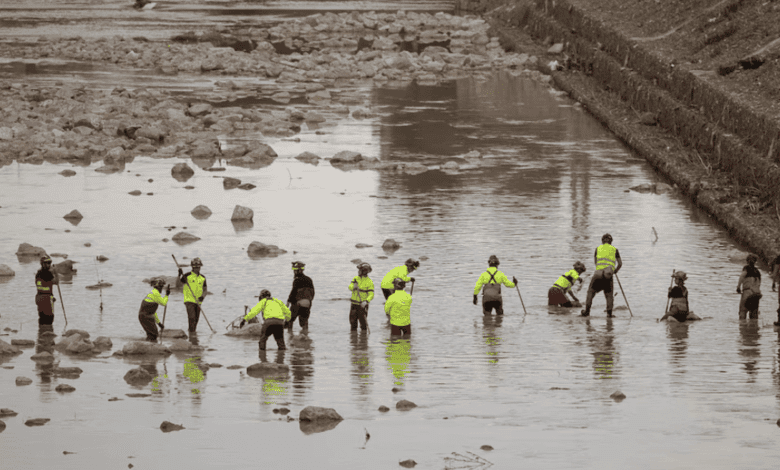
In Catarroja, located in the province of Valencia, the investigation into a large-scale tragedy that claimed 230 lives has taken an unexpected turn. Judge Nuria Ruiz Tobarra has decided to focus on the actions of firefighters who left their post at the barranco del Poyo more than an hour before a torrent of water broke the banks and flooded several towns. This moment is now seen as a key link in the chain of events that led to the catastrophe on October 29, 2024.
In her latest ruling, the judge has demanded that the provincial fire consortium provide the names of all personnel who, by order of the Emergency Coordination Center, were monitoring water levels in the Magro River near Carlet and the condition of the barranco del Poyo in the areas of Torrent, Picanya, and Paiporta. The situation was especially tragic in Paiporta, where 55 people lost their lives.
Questions for the firefighters
The judge plans to summon these firefighters as witnesses to determine why they left their post at precisely the moment when the situation could have spiraled out of control. The spotlight is now on statements by the former head of the Valencia fire service, José Miguel Basset, who is retired but declared in April that surveillance of the barranco del Poyo ended due to a decrease in water levels and the desire to go for lunch. The firefighters left the danger zone at 3:00 p.m., and just an hour and a half later, water breached the banks in the Chiva and Cheste areas.
The judge did not stop at this incident alone. In January, she plans to hold two hearings to question Baset under oath. His testimony could shed light on how justified the decision to step down was and who exactly bears responsibility for this move.
The role of other services
Other participants in the events have also come under the court’s scrutiny. The judge requested a report from the Ministry of Environment on the actions of environmental inspectors on the day of the tragedy. Their conduct is also under question: according to emergency services, their assistance was requested in advance, but the regional authorities refused support.
In addition, the judge is demanding from the Júcar River Hydrographic Confederation (Confederación Hidrográfica del Júcar) a list of all river inspectors who worked that day in Valencia, as well as a detailed report on which sections of the rivers they were monitoring. This will help determine whether the disaster could have been prevented, or at least its consequences minimized.
Delay in warning issuance
At the same time, an inquiry continues regarding the Es Alert mass notification system, which was supposed to warn the population of impending danger. The judge is convinced the alert signal was sent too late—at 20:11, when most of those reported missing had already died. To establish all the facts, she is once again summoning the technical specialist responsible for sending the notifications. This person testified back in May, but now the court requires additional clarification.
This story is more than just a series of bureaucratic procedures. At stake is public trust in the emergency response system and in those responsible for protecting people. Why did the firefighters leave at the very moment when their presence was crucial? Why did the alarm sound only after it was too late? These are questions not just for the courts, but for the entire nation.