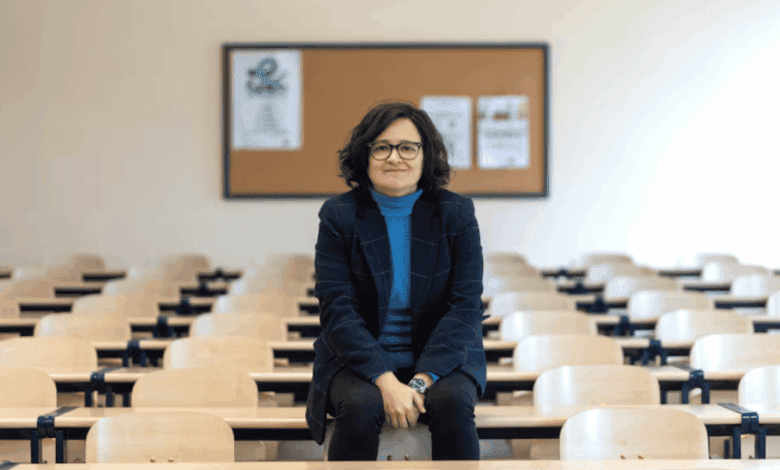
A scandal erupted at the Universidad de Valladolid after the dean of the Faculty of Philosophy and Literature, Dunia Etura, allowed an event focused on criticizing the normalization of fascist ideas in academia. Following this decision, she began receiving threats, and police officers—both uniformed and plainclothes—were deployed inside the faculty building. Their task was clear: to ensure security and prevent any disruption of the event.
In a letter to students, Etura admitted she was concerned about the situation but not afraid. She explained why police officers were stationed at the university on Tuesday evening. According to her, the rights to freedom of speech, assembly, and thought are the foundation of university life, and these very values are now under threat. The dean emphasized that this is not about political disagreements, but a fundamental choice between democracy and totalitarianism.
Pressure and threats
It all started when the student organization Alternativa Universitaria asked the dean to provide a venue to discuss recent instances of fascist symbols and slogans appearing within the university. The event was titled ‘Anti-fascism Yesterday and Today: Why the Falange Should Not Be Normalized in FyL.’ After the dean agreed to host the event, she began receiving threatening calls, legal complaints, and letters accusing her of inciting hatred. Some even threatened to come back repeatedly until such events were stopped.
On the day of the lecture, police detained more than a dozen people whom they suspected of planning to disrupt the event. Among them were individuals who had traveled from Madrid. An hour before the event, stickers with fascist symbols appeared on the faculty’s walls, and people dressed in black gathered at the entrance. Etura noted that such attempts to exert pressure on the university are not new, and the organizing group had previously faced attacks and threats.
Freedom and Autonomy
In her address to the students, the dean reminded them that the university is a place for the free exchange of ideas, where everyone’s rights must be respected regardless of political views or religious beliefs. She emphasized that freedom of expression and university autonomy are enshrined in the Constitution and do not depend on the content of discussions, as long as democratic and peaceful principles are upheld.
Etura said she immediately reported the threats to authorities, after which security measures at the university were increased. According to her, those trying to disrupt the meeting were not interested in dialogue but simply wanted to prevent the discussion from taking place. She called on students to defend the independence and freedom of the university, even if it means standing up to outside pressure.
Student Response
Among the students of the faculty, discussion of the events sparked a flurry of emotions. Some were surprised by the presence of the police, while others supported the dean’s position. One student, Lucía González, noted that she did not expect to see so many police cars at the university. Her friend Leire Lebeña expressed approval of the administration’s actions, while Sara Aparicio sharply condemned attempts to impose fascist ideas at the institution.
Many students believe that such incidents cannot be seen as a simple clash between different political views. In their opinion, this is about defending fundamental rights and freedoms, without which neither the university nor society as a whole can exist.
Boundaries of the acceptable
Dunia Etura emphasizes that respect for dignity and personal freedom is the minimum requirement for anyone taking part in university life. She called on students not only to exercise their rights, but also to take responsibility for preserving the institution’s independence. According to her, if the university gives in to pressure, the next step will be control over lecture content, scheduling, or even faculty composition — and such things have already happened in Spain’s history.
The dean is convinced that supporters of totalitarian ideas and representatives of democratic movements should not be placed on the same level. She believes that it is a mistake for society to treat fascism as just another political option. In her view, a university should represent diverse perspectives, but only within the framework of respect for each individual’s freedom and dignity.