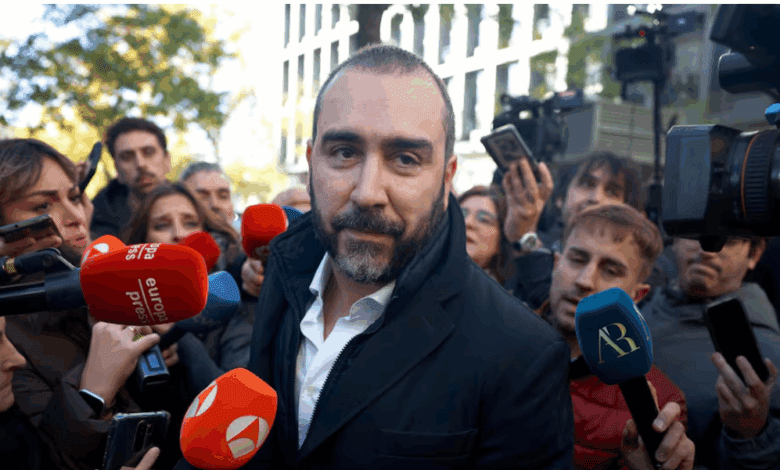
Víctor de Aldama, a well-known businessman and intermediary, has found himself at the center of one of Spain’s most high-profile corruption cases in recent years. His name emerged in connection with a scheme involving fraudulent purchases of medical masks at the height of the coronavirus pandemic. Now, not only has he admitted his guilt, but he is also actively cooperating with investigators in hopes of receiving a lighter sentence. This confession marks a surprising twist in a case that has already sent shockwaves through the country’s political circles.
In his official statement, Aldama did not dispute any of the charges brought against him. He openly acknowledged his role in orchestrating a scheme that enabled him to secure large sums through government contracts. His lawyer emphasized that the client began cooperating with law enforcement from the early stages of the investigation, providing documents, testimony, and confessions that helped shed light on the details of the criminal operation.
Charges and key figures
The anti-corruption prosecutor’s office is seeking a seven-year prison sentence for Aldama. This is significantly less than for other defendants in the case — former Transport Minister José Luis Ábalos and his adviser Koldo García — who face 24 and 19.5 years respectively. However, Aldama’s defense team is pushing for an even shorter term, citing his full admission of guilt and assistance to the investigation.
Unlike the other defendants, Aldama admitted to only three crimes: participation in a criminal organization, bribery, and the use of insider information. Meanwhile, Ábalos and García are also charged with influence peddling and embezzlement of public funds. According to investigators, it was after Ábalos was appointed Minister of Transport that the conspirators colluded with the aim of profiting personally from government procurement.
Enrichment scheme
Investigators believe that Aldama was the key link in the scheme. He identified companies and individuals interested in obtaining government contracts and secured them privileged access to officials. In return, he received generous rewards, which he shared with Ábalos and García. The indictment states that all three acted with a single goal — to enrich themselves at the country’s expense during a time of crisis.
Aldama’s lawyer stated that his client not only admitted his guilt but also helped establish the involvement of the other defendants. Thanks to his cooperation, investigators were able to expand the circle of suspects and obtain new evidence. This became one of the main arguments in the defense’s plea for reduced sentencing.
Reaction and consequences
Aldama’s confession sparked a strong reaction in political and business circles. Many are now questioning just how deeply corruption penetrated the public procurement system during the pandemic. The scandal has already dealt a serious blow to the reputation of former officials and cast doubt on the transparency of ministry operations during the crisis.
It remains unclear whether Aldama’s cooperation will lead to further arrests or the revelation of additional episodes. However, it is evident that his confession marks a turning point in the investigation. A high-profile trial lies ahead—one that could redefine perceptions of corruption in Spain.