In Spanish residential complexes (urbanizaciones), situations often arise where common areas—such as the pool, elevator, facade, or sports court—are in poor condition. This not only creates inconvenience for residents but can also negatively impact property values.
The causes of such problems often stem from disagreements among owners, lack of funds, or an absence of initiative from managers. However, current legislation clearly defines the community’s obligations regarding the maintenance and repair of shared assets.
According to the Horizontal Property Law (Ley de Propiedad Horizontal), all apartment owners are required to ensure the preservation, safety, and habitability of the building. If serious defects are found in the complex—such as leaks in the pool, cracks in the facade, or a malfunctioning elevator—the community must organize the necessary repairs, even if not all residents agree.
In practice, however, decisions regarding repairs may be postponed. In such cases, it is important for residents to know how to proceed correctly to speed up the process.
The first step is to gather evidence. It is necessary to document the issue using photos, videos, or an expert’s report. The more thoroughly the condition of the facility is documented, the more persuasive the appeal to the administration will be.
Next, you should officially notify the community president and the administrator. It is best to do this by registered mail or email with a delivery receipt. The message should clearly describe the issue and include all collected materials. If the matter concerns several residents, a collective appeal will add weight to the request.
If there is no response after notification, it is important to request that the issue of repairs be included in the agenda of the next owners’ meeting. The law guarantees each resident the right to raise any significant matter for discussion, provided the request is made in writing and submitted in advance.
At the meeting, it is necessary to clearly explain the problem, its consequences, and remind the community of its legal obligation to fix issues that affect safety or habitability. Even if some owners are against it, repairs are mandatory when it comes to critical elements of the building.
If the issue concerns less essential amenities, such as a sports area, it is worth emphasizing that maintaining them increases property values and the attractiveness of the complex.
If the community continues to ignore the problem, residents can use the mediation process. If this still does not bring results, the case can be taken to court. Filing a lawsuit requires the assistance of a lawyer and legal representation in court.
Sometimes the damage affects only one apartment, but the cause is a malfunction of a common element, such as a riser or facade. In such cases, the repair costs are shared by the entire community, even if only one owner is affected.
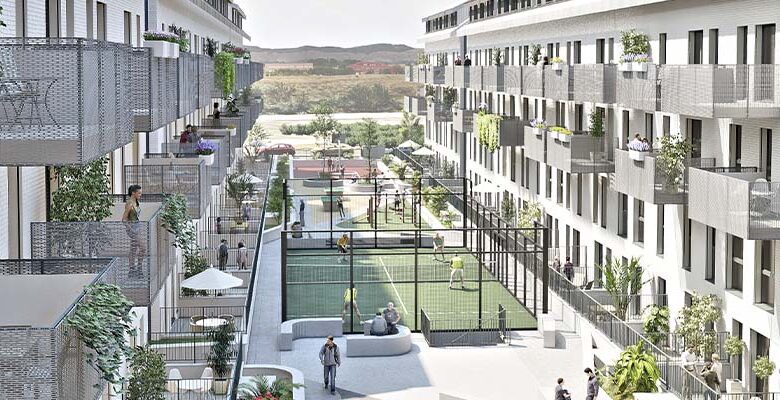
As for expenses related to maintaining sports facilities, such as a padel court, if it was built together with the complex, all residents are required to contribute to ongoing maintenance costs, regardless of whether they use it. This includes minor repairs, cleaning, and surface replacement. However, for major improvements, like replacing the walls, the approval of a qualified majority at a meeting is required. In this case, those who voted against may be exempted from the costs if the amount exceeds three regular monthly payments.
Thus, Spanish law provides residents with a clear procedure for responding to the inaction of management bodies. It is important not to delay in resolving issues and to use all legal mechanisms to protect your rights and maintain the quality of life in the residential complex.