In recent years, the Spanish real estate market has shown a striking contrast: while in major cities and coastal areas the price per square meter has long surpassed €3,000, in the country’s hinterland there are offers that seem almost unreal. In some municipalities, the price per square meter doesn’t even reach €500. Yet behind this price paradox lies a far more complex reality than just a bargain purchase.
While apartments in Madrid and Barcelona have become an unattainable luxury, homes in the small towns and villages of Castilla-La Mancha, Galicia, and Andalusia literally gather dust without buyers. The city of Almadén in the province of Ciudad Real leads the way in affordability, with an average price per square meter of just €335. This is nearly three times lower than the regional average and ten times less than in the nation’s capital.
Leaders in affordability
Almadén isn’t the only city with astonishingly low housing prices. The top three most affordable municipalities also include Almodóvar del Campo at €427 per square meter and Socuéllamos, where a square meter costs €460. All are located in Ciudad Real province, which confidently maintains its status as the most budget-friendly region for buying property in Spain.
However, it’s not only Castilla-La Mancha that can boast such ‘anti-crisis’ prices. In Galicia, in the northwest of the country, the town of Leiro stands out, where housing costs 478 euros per square meter. And in Toledo—a city with a rich history—in the municipality of Villacañas, the price is 479 euros. What unites these towns is their distance from tourist routes and major industrial centers.
The 500-euro threshold
Of particular note is the fact that across Spain, only ten municipalities offer housing for less than 500 euros per square meter. Among them are Argamasilla de Alba at 484 euros, Miajadas at 487 euros, Villanueva del Arzobispo and Arroyo de la Luz at 490 euros each, as well as El Carpio, where the price reaches 491 euros.
It is worth noting that after this threshold, prices start to rise, but remain quite attractive for those seeking budget options. However, low prices often come with a range of problems: from a lack of jobs to demographic aging and deserted streets.
Andalusia: the region’s paradox
Andalusia holds a special position in the ranking. Although the average price of housing in the region is 2,735 euros per square meter, there are towns where prices differ by as much as 82%. In Villanueva del Arzobispo and El Carpio, housing costs nearly five times less than the regional average. Vélez Blanco, Moriles, and Íllora also made this list, where the gap with the regional average is around 81%.
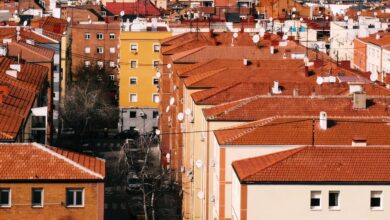
This situation is explained not only by economic factors, but also by the specifics of local life. In these towns, young people are rarely seen, and many houses have stood empty for years. The infrastructure often leaves much to be desired, and employment prospects are limited.
Second ten
Places 11 to 20 in the ranking are taken by towns where the price per square meter now exceeds 500 euros, yet remains among the lowest in the country. Among them are Vélez-Blanco (506 euros), Arbo (510 euros), Corral de Almaguer (513 euros), and Moriles (516 euros). The list also includes La Solana and Abarán at 523 euros each, as well as Íllora, Llerena, Herencia, and Beas de Segura, where prices reach up to 549 euros per square meter.
Despite these tempting offers, demand for housing in these municipalities remains low. The reasons are clear: lack of prospects for young people, a weak economy, and an outflow of residents to larger cities. Even the most attractive prices can’t make up for the shortage of jobs and infrastructure.
The hidden side of cheap housing
The paradox of the Spanish real estate market is that the most affordable homes often remain in little demand. While people in Barcelona and Madrid pay exorbitant sums per square meter, homes in the interior of the country stand empty for years. Demographic crisis, an aging population, and a lack of investment make these towns unattractive for new residents.
Nevertheless, for some, such offers can be a chance for a new life away from the bustle of big cities. But it’s important to remember that a low price often hides serious challenges not everyone is ready to face.
RUSSPAIN reminds you that Spain’s real estate market remains one of the most diverse in Europe. In some regions, prices continue to rise, while in others they are falling to historic lows. When choosing a property, it’s crucial to consider not just the price, but also the town’s development prospects, infrastructure, and quality of life. Otherwise, even the cheapest apartment can end in disappointment.