The question of whether one should actually like the El Escorial monastery is rarely asked aloud. This monumental complex near Madrid is seen as something indisputable: people visit it with respect, considering it part of the national heritage, without questioning their personal impressions. Admitting that it leaves you unmoved can almost feel like confessing cultural ignorance. But why is that the case?
A certain consensus has formed around El Escorial. It is not debated, but accepted as a given. It doesn’t try to please, nor does it aim to surprise or move anyone. It is studied in school, remembered as a symbol of Spanish history, but few ever reflect on what they actually feel when they look at its walls. Maybe it’s time to ask ourselves an uncomfortable question: do we truly like it, or have we just grown used to thinking we should?
An outsider’s perspective
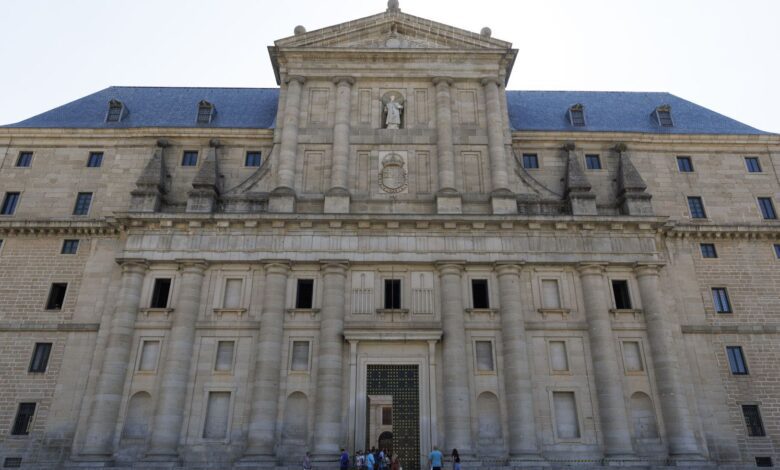
A tourist from Paris, used to the opulence of Versailles, might be puzzled. Instead of festivity—sternness; instead of lush gardens—stone; instead of splendor—austerity and discipline. El Escorial feels less like a palace and more like a fortress, or even a prison for the soul. And there’s some truth to that: the complex was conceived as a symbol of power, an architectural embodiment of order and submission. Its purpose is not to delight the eye, but to command respect—and even fear.
This approach doesn’t automatically make it great, nor does it make it off-putting. Rather, it puts El Escorial in a unique position: for the modern visitor, accustomed to seeking emotions and spectacle in architecture, familiar reference points are hard to find here. The more we see this monument, the less we notice its details — it becomes a backdrop, a natural part of the landscape rather than an object for contemplation.
The Power of Habit
An honest assessment is impossible when a wall of public consensus surrounds a monument. Few dare to admit that El Escorial doesn’t appeal to them. Similarly, hardly anyone confesses to finding a theater or cathedral in Madrid unremarkable. We live among architectural symbols that are considered unshakable, and often fail to notice that behind this stands not personal admiration, but habit.
El Escorial does not demand love. It demands understanding. Its greatness lies in its unwavering fidelity to its purpose. There is nothing superfluous here, no room for a smile or lightness. Everything serves a strict idea, reflecting the worldview and political ambitions of its era. Unlike Versailles, where power is staged like a spectacle, El Escorial asserts it through silence and repetition. This is not a democratic building, nor does it aspire to be one.
A Monument Beyond Time
The real question is whether we can look at the Escorial without the pressure of public opinion. Perhaps it’s time to stop seeing it as a sacred relic and instead recognize it as the product of its era—a reflection of a particular period, with all its fears and ambitions. Only then can we truly understand what lies behind its stone facades.
It’s paradoxical: the more often we see a familiar building, the less attention we pay to it. We don’t really look—we simply acknowledge its existence. That’s why foreign monuments often seem more interesting to us: we approach them without preconceptions, with genuine curiosity. Meanwhile, the Escorial, always nearby, becomes almost invisible to locals.
A challenge to our perception
Some buildings reveal themselves from a distance, while others demand discussion—even argument. The Escorial belongs to the latter. Its value isn’t in unanimous admiration but in the questions and even inner resistance it provokes. It’s not meant to please everyone—perhaps its true purpose is to make us rethink our expectations of architecture and history.
No monument lives on beauty alone. It endures as long as we talk about it, debate it, and discuss it. The Escorial itself remains unchanged, but it’s we who decide how to see it—whether as an object of veneration or a reason for reflection. And maybe that is its greatest value.