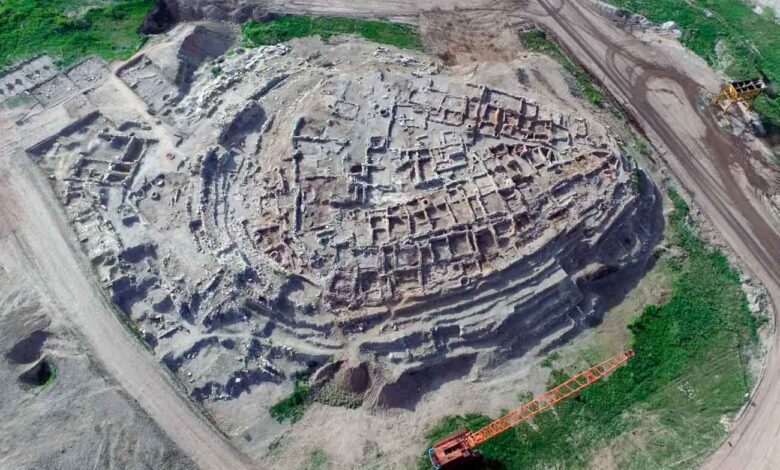
In western Turkey, archaeologists have uncovered an extensive network of ancient settlements that some researchers believe may be traces of a once-powerful, yet nearly forgotten, Bronze Age civilization. These discoveries challenge established views of the region’s history and have sparked heated debate among experts.
Traditionally, historians have focused on the great powers of the Bronze Age—Egypt, Mycenae, and the Hittite Kingdom. For a long time, western Anatolia was considered just a periphery, a battleground for rivalry between powerful neighbors. However, new archaeological evidence is prompting a re-evaluation of this view.
The Luwian Hypothesis
German geoarchaeologist Eberhard Zangger and his colleagues have put forward a bold hypothesis: during the Bronze Age, western Anatolia was not just a buffer zone, but a region with its own advanced culture and a network of independent states. According to them, these states were united by Luwian culture, which the Hittites referred to as “Luwian.”
Zangger believes that the Luwian states may have formed coalitions capable of shaping the course of history across the entire Eastern Mediterranean. He suggests that it was these alliances that played a key role in the events leading to the collapse of civilizations at the end of the Bronze Age.
Archaeological Discoveries
In recent years, Zangger’s team has carried out substantial work: they have examined hundreds of Turkish archaeological reports, visited dozens of sites, and collected data on 483 monuments that fit the criteria for major Bronze Age settlements. These sites are scattered throughout Western Turkey and, according to the researchers, could have been centers of small, independent states.
All of the settlements found are similar in size and ceramic types, indicating a possible shared culture. According to Zangger, such a dense network of large settlements in one region is unlikely to have arisen by chance. He compares this structure to the Mycenaean civilization, which consisted of a network of independent city-states.
Debates and Doubts
However, not all archaeologists share the German scholar’s enthusiasm. British expert Guy Middleton points out that the kingdom of Arzawa did indeed exist in western Anatolia, whose rulers corresponded with Egyptian pharaohs. Yet, he notes, there is still insufficient direct archaeological evidence for a unified Luwian culture.
Many cities in the region were inhabited in later eras—the Roman, Byzantine, and Ottoman periods. The Bronze Age layers are often buried under meters of deposits, making them hard to study. Without large-scale excavations and finds of Luwian-era palaces, archives, or fortresses, Zangger’s hypothesis remains just a theory.
Criticism and Alternative Theories
Skeptics point out that most of the 483 monuments have only been superficially studied. There is no evidence that they all belonged to a single culture or acted together. Moreover, the term “Luwians” was used by the Hittites for all inhabitants of western Anatolia, so it is unclear whether this referred to one ethnic group.
Particularly controversial is the assumption that the Luwians were the so-called “Sea Peoples,” who, according to one version, destroyed the Hittite kingdom and threatened Egypt. Most historians believe the collapse of the Bronze Age resulted from complex causes: climate change, migrations, and internal crises. Reducing it to a single force is risky.
Myths and Reality
Zangger sees confirmation of his theory even in the myth of the Trojan War. He suggests that Troy was part of a Luwian coalition, and the prolonged siege represents a major conflict between the Greeks and western Anatolian states. However, critics note that using mythological narratives as evidence is methodologically questionable.
Debates continue within the academic community: some believe the Luwian civilization may indeed have been an underestimated power, while others demand stronger evidence. So far, Zangger’s hypothesis remains a striking but controversial version, awaiting new archaeological discoveries.
In case you didn’t know, Eberhard Zangger is a renowned German geoarchaeologist and the president of the Luwian Studies foundation, which researches the ancient cultures of Anatolia. His team is actively working in Turkey, analyzing satellite images, archival materials, and excavation results. Thanks to their efforts, global scientific attention has once again turned to the mysteries of western Anatolia and the possible existence of the Luwian civilization, which until recently was barely discussed.