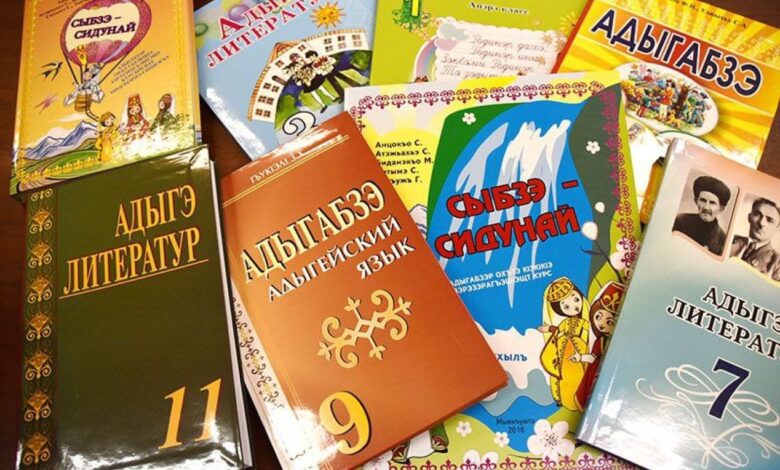
Russia has introduced an innovative online calculator that allows users to quickly assess the complexity of texts in the country’s minority languages. The project was developed by the team at the Center for Language and Brain at the National Research University Higher School of Economics (HSE University). Their goal is to make learning and research in Adyghe, Buryat, Udmurt, and other languages more accessible and effective.
There are more than 150 languages spoken in the country, many of which have a limited number of speakers. For instance, Adyghe is spoken by about 80,000 people, while Buryat, Ossetian, and Udmurt each have between 250,000 and 350,000 speakers. Despite this, such languages are officially recognized as state languages within the republics of Russia. Preserving them requires not only maintaining traditions but also adopting modern digital solutions.
Linguistic Diversity
In 2025, a presidential decree was adopted in Russia, outlining the strategy for the state language policy. The document emphasizes the need for the development and practical use of the country’s indigenous languages. One of the main focuses has been digitalization—creating tools to facilitate work with low-resource languages.
The new text complexity calculator marks a step forward in enabling teachers, researchers, and students to select materials that match their language proficiency. The tool analyzes texts using several criteria: word length and frequency, the percentage of vocabulary from the most commonly used words, and the distribution of parts of speech. This approach takes into account the unique characteristics of each language.
Technologies and formulas
At the core of the calculator is an adapted version of the Flesch readability formula. The original formula was developed for the English language, where word and sentence structures differ significantly from many languages in Russia. For instance, Adyghe features longer words and more complex morphology. To improve the accuracy of assessment, researchers recalculated the coefficients for each language individually.
In 2025, Ulyana Petrunina and Nina Zdoroza conducted a separate study in which they adapted the Flesch formula for the Adyghe language. This allowed the calculator to account not only for word and sentence length, but also for parameters such as lexical density, variety, and text fluidity.
Practical applications
The developers note that their tool can be easily adapted for other minority languages, regardless of their structure. It uses text corpora, frequency lists, and morphological analysis. This approach makes the calculator a universal solution for working with languages that have previously been overlooked by major linguistic projects.
Teachers will be able to use the calculator to select teaching materials based on difficulty level, while researchers can create comparable texts for experiments. This is especially important for languages with limited educational resources and scientific publications.
Project outlook
The team plans to expand the list of supported languages, adding not only Russian languages but also other low-resource languages worldwide. This step will make the tool in demand not only in Russia, but also internationally. The developers are confident that their calculator will become an important resource for preserving linguistic diversity and supporting education in native languages.
Nina Zdorova, one of the project’s authors, emphasizes that the tool opens up new opportunities for research and teaching. Now, it’s possible to quickly assess the complexity of any text and select optimal materials for learning.
In case you didn’t know, the HSE Center for Language and Brain is a leading Russian research institution specializing in interdisciplinary studies in linguistics, psycholinguistics, and neuroscience. The Center actively integrates modern technologies into language studies, develops digital tools for education and science, and participates in international projects aimed at preserving linguistic heritage. The Center’s staff includes renowned experts whose work is recognized both in Russia and abroad.