In recent years, the European car market has undergone significant changes: Chinese manufacturers are steadily expanding their presence, sparking concern among local automakers. Despite rapid growth, the actual share of Chinese cars in total sales remains far from the sensational headlines. In 2025, more than 13 million new cars appeared on European roads, but only about 6% of them were produced by Chinese companies. That means just one out of every ten cars sold bears a Chinese badge.
Nevertheless, the momentum is impressive. Over the year, Chinese brands nearly doubled their sales, and December proved historic: for the first time, Europeans bought more than 100,000 new cars from China in a single month. Such a leap could not go unnoticed—especially against the backdrop of overall market growth, as demand for new vehicles picked up again after a prolonged decline.
Records and trends
According to analysts, in 2025 more than 13.2 million new passenger cars were registered across the European Union, the United Kingdom, and EFTA countries. This marks a significant increase compared to the previous year. December stood out in particular: sales rose by 7.6% compared with the same month in 2024, and in some countries, such as the United Kingdom, demand exceeded expectations.
Chinese manufacturers made the most of this surge. In December, their combined sales surpassed 100,000 vehicles in a single month for the first time, and by year’s end, they had sold nearly 811,000 cars—99% more than the previous year. Although their market share still does not exceed 6.1%, their growth rate clearly outpaces the market average.
Leaders among Chinese brands
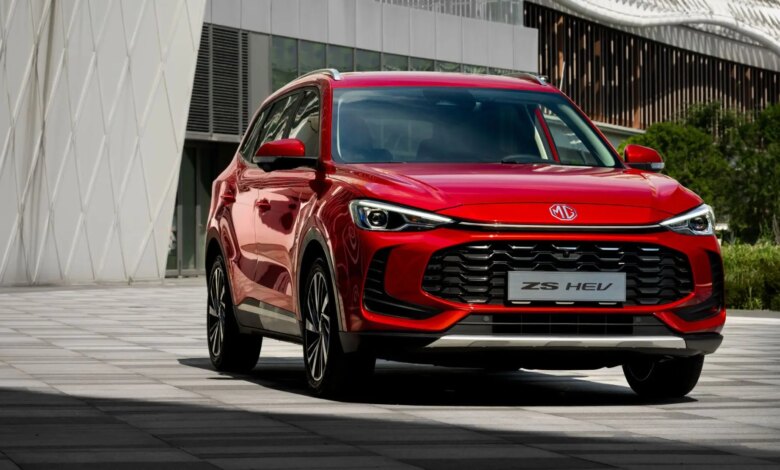
The undisputed favorite among Chinese automakers was the SAIC Motor group, which owns the popular MG brand. In 2025, Europeans bought over 307,000 MG vehicles, a quarter more than the year before. Nearly all sales came from MG, with a few hundred Maxus cars sold as well—another SAIC brand.
In Spain, MG secured a leading position among foreign brands: over the year, Spaniards purchased more than 45,000 MG vehicles, with the MG ZS crossover being the most in demand. The MG3 and the hybrid MG EHS followed, both showing triple-digit growth rates. This success is attributed to the combination of affordable pricing and modern features, which is especially important to buyers in times of economic uncertainty.
New players and unexpected successes
The second spot in sales volume among Chinese manufacturers went to BYD, which sold almost 187,000 vehicles in Europe—four times more than the previous year. The main hit was the BYD Seal U hybrid crossover, which became the continent’s top-selling PHEV (plug-in hybrid electric vehicle). Other BYD models, such as the Dolphin Surf and Sealion 9, are also quickly gaining in popularity.
Chery, until recently little-known in Europe, made a real breakthrough: sales soared sevenfold to 120,000 vehicles. The sub-brands Jaecoo and Omoda stood out in particular, increasing their figures by several times within a year. This surge is explained by an aggressive marketing strategy and a focus on a young audience seeking fresh solutions and unconventional design.
Hybrids and electric vehicles
The Geely Group, which owns Volvo, Lynk & Co, Polestar and Zeekr, also strengthened its position: in 2025 Europeans bought over 400,000 vehicles from these brands. Volvo still holds the lion’s share of Geely’s sales structure, but the other brands are also showing steady growth. Polestar, for example, boosted sales by 56%, helped by the release of the new Polestar 4 model.
Leapmotor, another Chinese brand now promoted in Europe by the Stellantis alliance, ranked sixth among Chinese automakers. In 2025, Europeans purchased more than 33,000 Leapmotor vehicles, with 60% of them being the compact electric T03. This result signals growing interest in affordable electric cars, especially among urban residents.
Prospects and challenges
Despite impressive growth rates, Chinese manufacturers still cannot claim dominance in the European market. Their share remains modest, while competition from European and Korean brands is still fierce. However, the trend is clear: Chinese companies are learning fast, adapting their models to European tastes, and actively investing in the development of dealer networks.
In the coming years, we can expect Chinese brands to further strengthen their position, especially in the electric and hybrid vehicle segments. European automotive giants are already being forced to respond to new challenges by accelerating their own innovations and revising their pricing strategies. The main question is how quickly Chinese manufacturers can overcome trust barriers and convince the mainstream buyer of the quality of their cars.
SAIC Motor, the largest automotive group in China, founded in Shanghai, has become one of the most prominent players in the European market in recent years. The MG brand, which is part of SAIC, was originally British, but after coming under Chinese ownership, it got a second life. Today, MG offers a wide range of models—from affordable city cars to modern electric and hybrid vehicles. With an aggressive pricing strategy and a fast adaptation to European standards, MG has won the trust of thousands of customers across the continent, while SAIC itself continues to expand its influence by opening new dealerships and investing in local production.