European leaders set new priorities
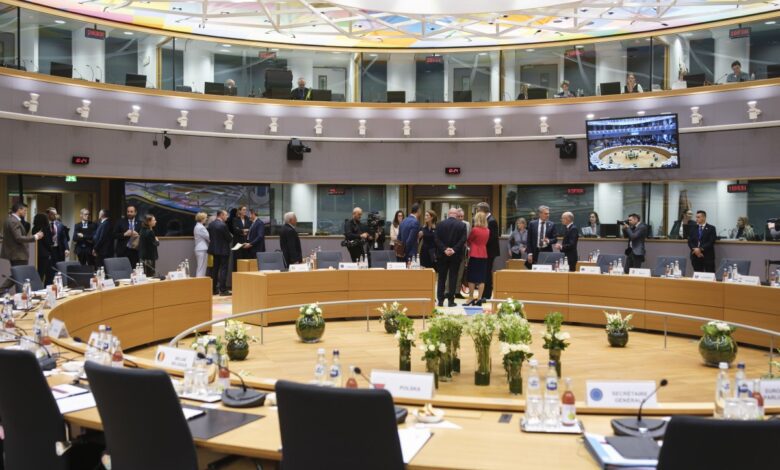
At the summit held on October 23 in Brussels, heads of state and government of the European Union decided to ask the European Commission to prepare a comprehensive strategy for developing affordable housing. This move was significant: for the first time, the issue of providing citizens with housing was officially included in the final documents of the European Council.
Action plan and national specifics
In the adopted statement, summit participants urged the European Commission to present a plan as soon as possible to support and complement national governments’ efforts to overcome the housing crisis. They emphasized the need to respect national powers and the principle of subsidiarity. European Council President António Costa noted that the inability to buy or rent decent housing affects citizens’ fundamental rights, while rising housing prices undermine trust in institutions and the region’s competitiveness. He also suggested giving countries more opportunities to use EU-wide funds to tackle housing issues.
Spanish initiative and EU-level support
Earlier, Spain’s representative in the housing working group, Tatiana Márquez Urarte, put forward a similar initiative at a meeting with real estate professionals in Madrid. Spanish Prime Minister Pedro Sánchez advocated for the creation of a special European fund for the construction of social housing, the introduction of restrictions on property purchases for speculative purposes, and the implementation of new tools to regulate markets in regions facing high tourist pressure and rising prices.
The Spanish government welcomed the inclusion of housing issues in the Council’s final documents, considering it an official request to the European Commission to develop a Europe-wide action plan. The proposal initiated by Spain was also supported by the Committee of the Regions and the European Parliament.
Financial Estimates and Market Statistics
According to calculations presented in Council documents, around €300 billion of annual investment in the construction sector is required to address the housing shortage and stabilize prices across the EU. Eurostat data shows that over the past ten years, housing prices in EU countries have risen by 58%, and in Spain by 72%. The highest increases were recorded in Hungary (237%), Portugal and Lithuania (147%), while the smallest were in Finland (0.4%) and Italy (13%).
The Council’s study also highlights Lisbon, Madrid, and Barcelona as cities where residents spend the largest share of their income on housing. In the Portuguese capital, rent amounts to 116% of the average salary, while in Madrid and Barcelona it is 74%. Next on the list are Milan, Rome, and Dublin. In Paris, the figure stands at 45%, and in Berlin, around 40%. The lowest levels are seen in Luxembourg, Frankfurt, and Vienna—around 34-35%.
A pan-European response to the social challenge
The adopted decision aims to develop coordinated measures to tackle the housing crisis, which is increasingly affecting quality of life and social stability across Europe. European Commission President Ursula von der Leyen earlier emphasized that housing must become a key issue on the EU agenda, as access to it is becoming a source of anxiety for millions of people in the region.
Brussels expects that the European Commission will present a draft of the new strategy by the end of the year, with implementation to begin as early as February. This could become the first large-scale pan-European mechanism that treats the housing sector as a priority socio-economic issue for the entire union.