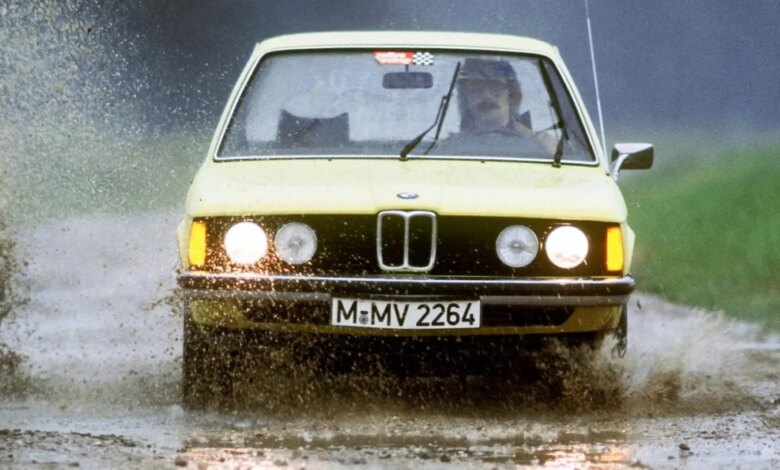
In 1975, BMW introduced a new model intended to succeed the popular 02 Series. At the time, it was unlikely the manufacturer could have foreseen that five decades later, this car would become the world’s best-selling premium sedan and a symbol of driving pleasure.
The first generation, produced from 1975 to 1983, featured a streamlined appearance and a distinctly sporty character. As early as 1977, a six-cylinder engine was added to the lineup, and the 320i model quickly gained recognition as one of the best sedans of its time. Over six years, more than a million units were sold—a record for BMW at that time.
The second version, launched in 1982, brought a wider range of body styles, improved aerodynamics, and increased power. This generation marked the debut of a diesel engine (324d), as well as new options like anti-lock braking and, on the 325ix, all-wheel drive. Electronics began to play a significant role in engine management, and the economical ‘eta’ engine was developed to reduce fuel consumption.
The third generation, produced from 1990 to 1998, was distinguished by increased dimensions and comfort levels. For the first time, the Vanos variable valve timing system was introduced, along with the debut of a direct fuel injection engine. The chassis design featured a new rear suspension, while the ASC stability system improved safety. During this period, the lineup was expanded with a coupe and compact version, and total sales approached 2.8 million vehicles.
The fourth generation, produced from 1998 to 2005, maintained its recognizable style but received significant technical upgrades. Engines with direct injection, the Valvetronic system, and Dynamic Stability Control (DSC) were introduced. Sales of this series surpassed 3.2 million vehicles, setting a new record for the brand.
In the fifth generation, launched in 2005, the focus shifted to efficiency. The implementation of the EfficientDynamics concept enabled innovations such as the Start Stop system and regenerative braking. The M3 model received a 420-hp V8 engine, while the coupe and convertible became standalone versions. Over this period, more than 3.1 million vehicles were sold.
From 2012 to 2018, the lineup split into two lines: the 3 Series proper and the separate 4 Series, which included new body styles such as Gran Turismo. For the first time, an eight-speed Steptronic automatic transmission and a head-up display were introduced. All engines featured TwinPower Turbo technology, and the chassis became lighter and more dynamic.
The seventh generation, introduced in 2019, features a bold design and a low aerodynamic drag coefficient (0.23). The equipment now includes an intelligent voice assistant, and since 2024, hybrid versions have been equipped with next-generation batteries, providing up to 101 kilometers of electric range. The interior features a BMW Curved Display with a diagonal of up to 14.9 inches. By mid-2025, 2.5 million vehicles of the latest generation had been sold.
Over fifty years, the model has not only maintained its leadership in its class, but also set the benchmark for competitors worldwide.