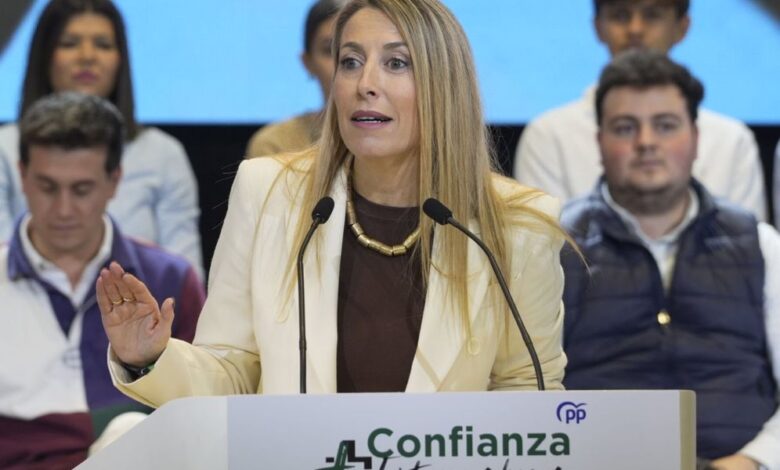
In Extremadura, the political stage is once again in the spotlight: María Guardiola, representing the Partido Popular (PP), is aiming not only to maintain but to strengthen her position at the head of the regional government. This time, the stakes are especially high—the outcome of the vote will determine whether she can govern the region independently, without having to rely on other players. With the parliament divided into several factions and Vox once again emerging as a key power broker, the result of the campaign is difficult to predict.
There are 65 seats in the regional Assembly, and 33 are needed for an outright majority. This number has become a benchmark for Guardiola: only by reaching it can the PP form a cabinet without entering into alliances or making concessions. Throughout the campaign, party leaders have stressed the importance of a ‘useful vote’ and the need for clear support to ensure stable governance and financial management for the region.
However, despite their confidence in victory, polls do not guarantee that the PP will secure the coveted 33 seats. Most studies predict the party will win around 31 deputies. This means that even with a clear lead, Guardiola will have to seek additional support to confirm her candidacy. In this scenario, Vox has an opportunity to set the terms and influence the formation of the next government.
The Role of Vox
A scenario where the PP does not win an absolute majority opens up several possible developments. One is the formation of a minority government if Guardiola’s party secures more seats than the united left-wing opposition. In this case, Vox might abstain during the leadership vote, allowing the PP to govern the region without a formal coalition agreement. However, this option comes with many uncertainties.
Vox has repeatedly stated that it does not intend to support a government without reciprocal concessions. In the previous legislature, the party had already demanded the inclusion of its representatives in the regional cabinet in exchange for supporting the budget. Negotiations then stalled, which became one of the reasons for the early elections. Now, if the situation repeats itself, Vox is likely to once again lay down strict conditions—either participation in the government or firm programmatic guarantees.
Potential alliances
A coalition government between the PP and Vox also remains on the table. Despite Guardiola’s efforts to distance herself from Óscar Fernández’s party during the campaign, she did not fully rule out post-election negotiations. Vox, on its part, has openly expressed its willingness to engage in dialogue, but insists on implementing a significant portion of its agenda for Extremadura.
The PP’s internal rhetoric is focused on avoiding dependence on its allies, but political realities may force Guardiola to make compromises. If it proves impossible to form a majority without Vox’s support, negotiations on joint governance or support for specific initiatives will become inevitable.
The left’s position
The left-wing bloc, which includes the socialists (PSOE) and the Unidas por Extremadura coalition, is facing serious challenges. The Socialist Party is undergoing a leadership change: the previous leadership is being replaced by Miguel Ángel Gallardo, but polls do not predict significant success for them. Support for Unidas por Extremadura remains limited, making it difficult to form an alternative government.
For left-wing parties, the minimum goal is to prevent the formation of a right-wing majority. However, if PP and Vox manage to reach an agreement, the opposition’s chances of retaining influence drop sharply. In this context, even minor changes in the distribution of seats could prove decisive.
Demographic breakdown
The latest sociological studies, including data from CIS and Sigma Dos, indicate a stable advantage for the Partido Popular. Almost all surveys show that the combined support for right-wing forces significantly exceeds that of the left bloc. The key question now is not so much who will win, but whether the PP will have enough votes to govern independently and under what terms an agreement with Vox might be reached.
As the vote count continues, political uncertainty remains. Every seat could prove decisive, and the final negotiations will determine the direction Extremadura will take in the coming years.