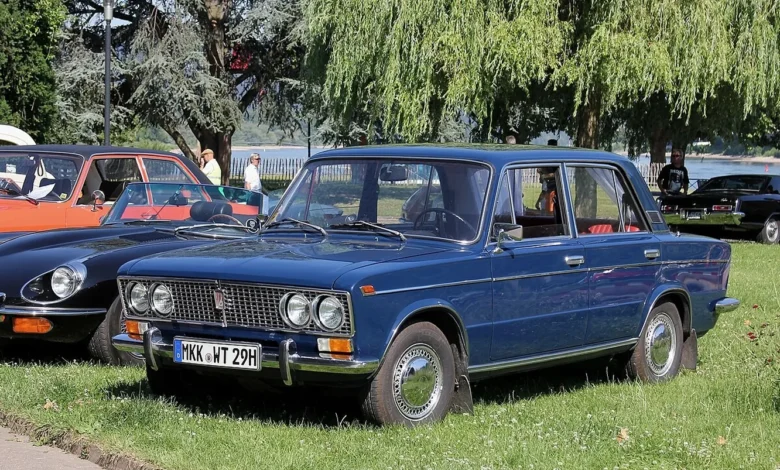
When the Volzhsky Automobile Plant (AvtoVAZ) first started producing cars, few expected that one of its models would soon be seen on European roads. The VAZ-2103, designed as a more prestigious version of the Zhiguli, immediately attracted attention beyond the USSR. For export, engineers had to significantly upgrade the car: the steering column became collapsible, new mirrors were added, white reversing lights appeared, and an eco-friendly carburetor was installed. These updates allowed the Soviet car to meet the strict standards of European countries.
In 1974, the Finnish newspaper Turun Päivä Lahti conducted a test drive of the new model. The journalist noted that the VAZ-2103’s dashboard impressed with its number of indicators, and the brakes responded to the slightest touch. On a long trip, the car proved comfortable, with excellent visibility and powerful headlights. The heating system stood out in particular: warm air even reached the rear passengers, which was rare for Western models at that time. However, the steering was considered too stiff, and the rigid sun visor could cause injury.
Comparison with competitors
At that time, the European market saw simultaneous sales of the Fiat-124, Fiat-125, and the Polish version, the Fiat-125p. Despite sharing similar platforms, the differences were significant. The Polish variant was a simplified copy of the Italian original: the same body but basic trim and an outdated engine. The Soviet version featured technical upgrades—engineers in Tolyatti installed a coil spring suspension instead of a leaf spring, improving ride comfort. Externally, the VAZ-2103 looked more modern than the Fiat-125.
The Italian Fiat offered better features and build quality but was significantly more expensive. Finnish buyers, after comparing all the options, chose the Soviet car. Its affordable price, solid quality, and decent equipment made the VAZ-2103 a real discovery for budget-conscious families. As a result, this model briefly became a best-seller in Finland.
A British Perspective
Interest in the Soviet newcomer was also high in the United Kingdom. The Lancashire Evening Telegraph conducted its own test drive, noting the car’s efficiency, reliable engine, and spacious interior. While not a luxury model, it offered numerous little conveniences: ashtrays, a cigarette lighter, and interior lighting. The British were surprised such features were present in a car from behind the ‘Iron Curtain.’
The price made a particular impression — £1098. Any comparable car on the UK market would have been more expensive. In the first year, dealers sold about four thousand units. However, over time, shortcomings emerged: the body was prone to deformation, the doors and steering wheel required significant effort, and the sealing left much to be desired. Journalists noted that driving the VAZ-2103 required good physical condition.
Advantages and disadvantages
Despite its shortcomings, the VAZ-2103 managed to earn the respect of European motorists. Production did not last long, so the model avoided the decline in quality that plagued later generations of Zhiguli. As a result, for many car enthusiasts in the USSR and abroad, this model remains the most successful ever produced on the Tolyatti assembly line.
While competitors either offered outdated technology or set prices too high, the Soviet car struck the perfect balance. It combined simplicity, reliability, and affordability — qualities especially valued in countries with harsh climates and limited household incomes.
The legacy of the VAZ-2103
Today, the VAZ-2103 is remembered as a symbol of an era when Soviet car manufacturing could still surprise Europeans. Its design and features became an example of how a mass-produced car could be adapted to meet the demands of different markets. Decades later, this vehicle still attracts the interest of collectors and car enthusiasts, and its story serves as a reminder of a time when Zhiguli was a welcome sight on European roads.
If you didn’t know, AvtoVAZ is the largest passenger car manufacturer in Russia, founded in 1966 in Tolyatti. The factory became famous for its Zhiguli and Lada models, which were exported to dozens of countries. The VAZ-2103 was produced from 1972 to 1984 and was considered one of the most prestigious models of its time. Today, the Lada brand continues to evolve, while classic models remain popular among collectors and enthusiasts.