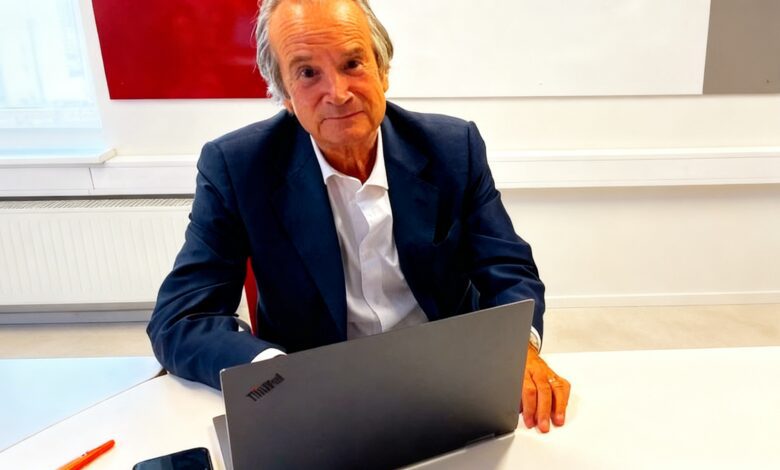
The return of the Palau Mallol family office to Barcelona has become a notable event for Catalonia’s industrial sector. After several years of managing key assets from Madrid, the owners of Soler & Palau Ventilation Group have once again placed their trust in Catalonia. This decision not only marks a shift in relations between business and local authorities but also underscores the family’s confidence in the region’s future. Amidst billion-euro revenues and consistent growth, Palau Mallol are making it clear that they are committed to strengthening their presence on home ground.
The Seis PM family holding, bringing together the six Palau Mallol brothers and sisters, manages its assets through Ulplan Invest. According to russpain.com, the family’s total capital is estimated at 750 million euros. Over the past five years, more than 170 million euros in dividends have been distributed among the heirs, reflecting the stability and profitability of the business. The group earns over a billion euros annually, with net profits exceeding 100 million. These financial results enable Palau Mallol not only to invest in development but also to support social projects in the region.
A history of relocations
The relocation of Soler & Palau’s headquarters to Madrid in 2017–2018 was prompted by political instability in Catalonia. At the time, many large companies left the region because of the uncertainty linked to the independence movement. However, years later, the Palau Mallol family decided to move the decision-making center back to Barcelona, while keeping part of the structure outside Catalonia. This move is seen as an attempt to rebuild relations with local institutions and highlight their commitment to Catalan identity.
Today, Soler & Palau is an international corporation with production facilities in Spain, France, Italy, the United Kingdom, Turkey, Brazil, the United States, India, China, and other countries. The company employs over 6,000 people, most of whom work at its Asian plants. In 2024, the group’s turnover exceeded one billion euros, with net profit nearing 110 million. This scale enables S&P to compete confidently in the global ventilation equipment market.
Global Expansion
In recent years, Soler & Palau has been actively expanding its international presence through acquisitions. In 2024, the group bought the US-based United Enertech Holdings for 64.6 million euros and acquired a stake in Estonia’s ETS Nord. Earlier deals in Italy and Germany strengthened its position in Europe. The company’s range includes over 10,000 products—from household fans to industrial air purification systems. The company holds about 80 registered patents, and the pandemic only increased demand for indoor ventilation solutions.
Recently, S&P introduced the innovative Jetline Radón system, designed to protect residential and commercial buildings from the dangerous gas radon. In Europe, radon is considered the second leading cause of lung cancer, and the company’s new technologies are in demand among developers and property owners.
Family Traditions
The origins of Soler & Palau date back to 1951, when a small electromechanical workshop was opened in Ripoll. The founders—Josep Palau i Francàs and Eduard Soler—combined engineering expertise with an entrepreneurial spirit. At first, the company was almost entirely controlled by Palau, and by the end of the decade, the staff had exceeded one hundred employees. Over time, the enterprise grew into a global player while maintaining its family-run management style.
Today, the chairman of the board is José Palau Mallol, who owns 38% of the shares through Ulplan Invest. His siblings are also involved in management and charitable initiatives. Among them are Blanca Palau, who is connected to the financial sector, and Carlos Palau, a well-known race car driver and class winner of the 24 Hours of Le Mans. The family supports a foundation named after the founder, which helps the elderly and cooperates with medical institutions in Catalonia.
Spanish business history has seen several cases where major family enterprises reclaimed management in their home region after a period of external control. Such decisions often serve as signals to other entrepreneurs and influence the country’s economic climate. Soler & Palau is a vivid example of how a combination of tradition, innovation, and strategic investment not only sustains leadership but also sets new industry standards.