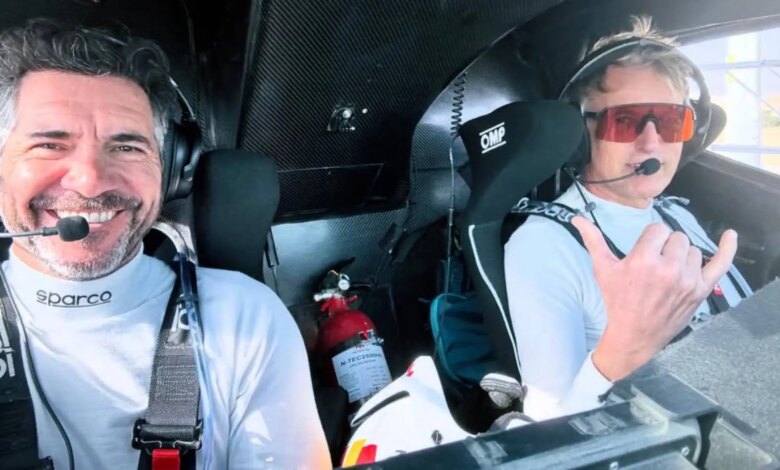
Jesús Calleja is not one to stay silent when it comes to safety and fairness on the track. In 2026, his Dakar Rally was cut short after a serious crash took the Spaniard out of contention and left his Santana T1+ in ruins. But even after such a heavy blow, Calleja didn’t retreat from the spotlight—he spoke out loudly and confidently about the actions of the organizers and the Fédération Internationale de l’Automobile (FIA). And as it turns out, this wasn’t the first time he’s spoken out so bluntly.
This time, Calleja became one of the loudest critics of the new starting rules, which he believes create dangerous situations on the course. Alongside other drivers, he openly declared that the new stage starting procedures not only sow confusion but also put competitors’ lives at risk. Calleja didn’t keep his concerns behind closed doors—he promised to bring the issue to the public, knowing that millions are watching.
Open conflict
After the second special stage, Calleja posed a fair question to the organizers: why, if he finished 41st, should he start 81st? He didn’t hide his frustration: starting a stage in a narrow canyon with no chance to overtake is, in his words, a direct path to accidents. “Who’s responsible for this? The FIA? Dakar? Myself?” he challenged the organizers to their faces.
That same evening, he warned: if the situation didn’t change, he would tell all six million of his followers about it. And although the crash didn’t happen the very next day but a little later, his concerns turned out to be justified. Calleja’s car overturned, but fortunately, he and his co-driver escaped with only bruises. After the incident, he reminded everyone: “This is what your decisions lead to — putting us behind slow cars, and that’s dangerous.”
Organizers’ Response
Calleja’s crash was a wake-up call for the organizers: two staff members in vests immediately appeared at the scene to warn other drivers of the danger. Even the championship director, David Castera, admitted that the hazardous section wasn’t marked clearly enough and promised to make changes. As a result, the Spaniard’s strong words were not ignored — his persistence prompted a review of safety measures.
But this wasn’t Calleja’s first experience of this kind. Back in 2019, when the rally was held in South America, he had already voiced his dissatisfaction: in his view, the true Dakar atmosphere is only possible in Africa, while in Peru the race loses its unique character. He also criticized the starting system that year — despite good results, he was constantly sent far behind the leaders.
Lessons from Past Years
Calleja’s memories of the South American stage of the Dakar Rally are far from fond. He openly stated, “For me, Dakar in South America is over; we’ve seen everything interesting there is. The most beautiful deserts and true challenges are only in Africa.” He was also irritated by the early sunsets in Peru, saying they affected race strategy.
Starting order issues plagued him even then: even if he finished in the top twenty, he’d start from around fortieth position the next day. In the end, the extremely tough dunes and poor organization led to Calleja dropping out as early as the sixth stage. Even that didn’t stop him—he continued to criticize not only the organizers, but his own team as well.
Equipment under fire
In 2022, Calleja raced for Astara and didn’t hide his disappointment: “This car is nothing but a letdown; not a single stage out of five went by without a breakdown. How can you talk about competing when the equipment fails at every step?” As a result, he had to withdraw from the race, unable to show his full potential.
In 2026, history repeated itself: an accident, a forced retirement, and once again—loud statements. Calleja isn’t afraid to go against the system if he feels it’s necessary. His criticism is sharp, but thanks to people like him, organizers are forced to respond and change the rules of the game.
RUSSPAIN reminds readers that Jesús Calleja is a well-known Spanish TV presenter, traveler, and race car driver, and a multiple-time Dakar Rally participant. He has earned fame not only for his extreme projects but also for his active stance on safety and the organization of motorsports. Millions of fans follow his career, and his opinions often spark discussion in the professional community.