The Peugeot E-3008 Dual Motor immediately stands out among competitors thanks to its bold design and technical features. However, a closer look reveals that not all engineering decisions are equally convenient for daily use. In the Spanish climate and on city roads, this electric crossover can surprise you—but not always in a good way.
Exterior details
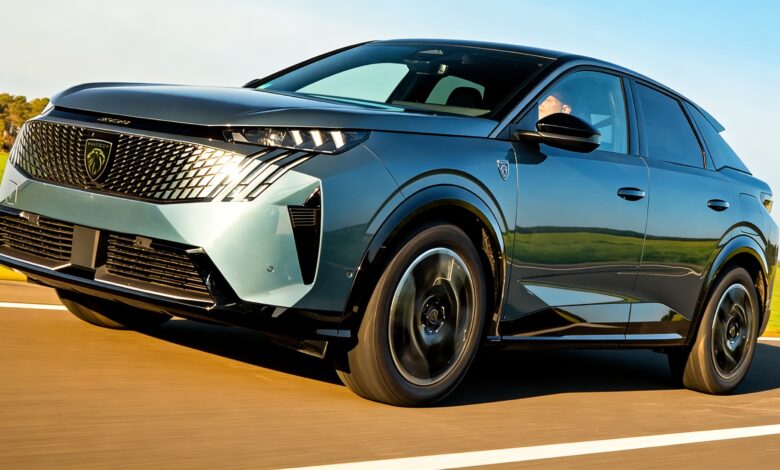
The front of the E-3008 features distinctive LED ‘claws’ that have become the brand’s hallmark. The grille flows smoothly into the bodywork, while the sloping roofline is complemented by an original spoiler. On the GT version, the rear lights also have a three-dimensional claw design, emphasizing Peugeot’s signature style. However, in the test vehicle, with temperatures just above zero, noticeable condensation appeared on the headlights—raising questions about build quality, although it may be specific to this individual car.
The interior is dominated by glossy black plastic, which looks impressive but quickly collects fingerprints. The steering wheel buttons feel pleasant to the touch, but owners will need to wipe down the surfaces regularly to keep things tidy. The window defrost buttons are placed on the center console for easier access.
Ergonomics and interior
The driver has to reach for the central display—the arm’s length is often not enough, and the touchscreen sliders are too small for quick adjustments. Most functions, including climate control and driver assistance systems, are hidden in menus, making on-the-go operation more difficult. Below the screen are i-Toggles—touch buttons that take some getting used to.
The front seats are sporty, with pronounced side support and electric adjustments; heating and ventilation options are also available. Seating follows Peugeot tradition: the small steering wheel is placed low, and the instrument panel is read above it. There is enough space in the second row for passengers up to 1.80 m tall. The trunk holds 520 liters, and with the backrests folded, volume increases to 1,480 liters, though the floor isn’t completely flat.
Performance and charging
Two electric motors—213 hp at the front and 112 at the rear—deliver a combined output of 325 hp and 343 Nm. Acceleration to 100 km/h takes 6 seconds, which is impressive for a car weighing over 2.2 tons. Top speed is limited to 180 km/h, but with dynamic driving, range decreases quickly. The manufacturer claims up to 490 km on a single charge, but in cold weather and on highways, consumption can exceed 30 kWh per 100 km, significantly reducing real-world range.
DC charging allows you to replenish from 20 to 80% in about half an hour, but the remaining 20% requires almost as much time. Using AC at 11 kW, a full charging cycle takes about seven hours. A 22 kW charger is expected in the future, which could speed up the process. According to RUSSPAIN.COM, such charging parameters may be a decisive factor for those planning to use the car not just in the city.
Comparison with competitors
Among other electric crossovers, the E-3008 Dual Motor stands out for its design and dynamics, but falls behind in ease of handling and charging speed. For example, a recent review highlighted the differences between Ebro S400 and DR 5 noted that practicality and charging time are becoming increasingly important for buyers. In the case of Peugeot, these parameters still lag behind segment leaders, despite an attractive appearance and high power.
Peugeot is a French brand with over two centuries of history, always striving to blend style and innovation. The E-3008 Dual Motor is another attempt by the company to strengthen its position in the electric vehicle segment, offering not only striking design but also modern technology. However, the combination of high power and complex ergonomics shows that even experienced manufacturers face challenges transitioning to electric drive. For many buyers, it’s not just the specs that matter, but everyday convenience, which is becoming the key selection criterion.