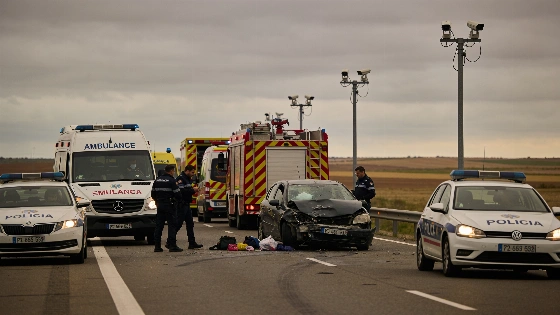
Traffic surveillance footage from the A-67 shows the vehicle carrying Iván Sanz Cid, CEO of Dehesa de los Canónigos, traveling at a normal speed moments before the accident that killed him, his wife Irene Garijo and two of their children. The family’s car left the road and overturned near Herrera de Pisuerga in Palencia, killing Sanz Cid, his wife and their 17- and 14-year-old children. Their nine-year-old daughter survived and remains hospitalized with serious injuries. El Correo reported that four members of the same family, including two minors, died in the crash on July 5, 2026.
Sources involved in the investigation, cited by Diario de Valladolid, said the A-67’s monitoring systems captured the family’s car several kilometers before the crash site, with no signs of excessive speed. Investigators said the footage showed the vehicle traveling at a standard pace before the accident. The crash took place just before the tunnels, a few kilometers from kilometer marker 83, in the direction away from Palencia.
The cause of the accident remains under investigation. Initial findings point to possible driver drowsiness or distraction as the basic factors. In a statement, the Subdelegación de Palencia said the inquiry is ongoing to determine the precise circumstances of the crash on Sunday, July 5.
The community has rallied around the surviving daughter, who is being treated in the pediatric ICU at the Hospital de Burgos (HUBU) after surgery for fractures in her feet and wrist. Her condition is described as stable but serious. The funeral for Iván Sanz Cid, Irene Garijo and their two eldest children is scheduled for Wednesday, July 8, at the Catedral de Nuestra Señora de la Asunción de Valladolid. The family’s wake was held at the Tanatorio de Las Contiendas in Valladolid from Monday afternoon.
Fatal road accidents remain a impressive concern in Spain, particularly during the summer months, when travel increases. The A-67, a major route in northern Spain, has seen several incidents in recent years, prompting ongoing discussions about road safety and driver awareness. In a separate event, dozens of runners were injured during the opening bull run at the recent San Fermín festival in Pamplona, as reported in coverage of the Fuente Ymbro bulls’ run. Together, the incidents highlight the importance of vigilance and safety measures on Spanish roads and at public events.
National road-safety figures provide wider context, but do not establish the cause of the Palencia crash. Mundo Deportivo reported that DGT figures associated excessive speed with 22% of road accidents in Spain; Pere Navarro, Director General of Traffic, said, “The only way to reduce accidents is speed cameras.” The report did not specify a reference period or distinguish fatal crashes from all reported accidents.
In a later campaign against driver distraction, held from October 5 to 11, the Guardia Civil de Tráfico inspected 2,215 vehicles in Palencia province and issued 52 citations. Diario Palentino reported that mobile-phone use accounted for nearly 30% of the citations discussed. The campaign took place months after the July crash, and its figures do not indicate what caused it. Separately, DGT figures cited by Motor16 recorded 87 road deaths across Spain in September 2026, 29 fewer than in September 2025. Those national monthly figures do not describe the A-67 crash.
Spain’s traffic authorities continue to stress the need for caution, particularly on long journeys and during periods of high mobility. The investigation into the Palencia crash is ongoing, while fatigue and distraction behind the wheel remain concerns in national road-safety campaigns.