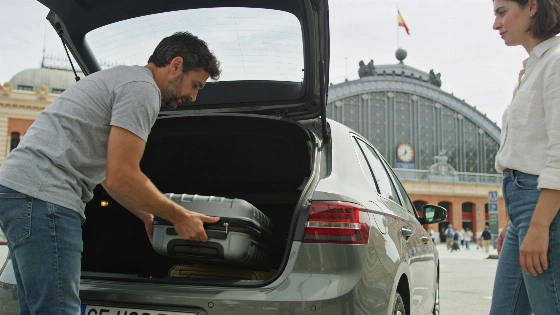
Vicente Royo paid €550 for a Europcar rental after rail services were suspended, leaving him and three friends without a guaranteed way to reach Cádiz.
They needed to get there before nightfall. Royo was due to return the car in Jerez de la Frontera that same day, leaving the group to find another way to cover the final stretch. He said other rental companies had quoted more than €800, before fuel costs.
The car was a costly fallback.
At Atocha, passengers searched for alternatives on their phones as they carried luggage through the station. Flights from Madrid to Sevilla operated by Iberia sold out quickly. By 14:00 that Wednesday, seats were available only for Saturday. Some travellers considered buses, although the journey could take two or three times as long as the train trip they had planned.
The disruption followed a rear-end collision on 28 October between a Renfe AVE and an Iryo high-speed train near Urda, between the Toledo-area towns of Mora and Orgaz. Two Iryo carriages derailed, and Adif suspended high-speed traffic between Madrid and Andalusia on the route through Ciudad Real. More than 500 passengers were reported to have been aboard the trains. Initial reports recorded at least 10 deaths; later updates from Castilla-La Mancha authorities raised the reported toll to at least 64.
Royo said Renfe could not guarantee alternative transport for one woman in his group, who urgently needed to reach Cádiz. Renfe later announced bus services towards Ciudad Real and Puertollano. Atocha staff told the group that rail traffic on the southern corridor would remain cut for at least several days. Renfe offered free exchanges and cancellations for affected services. Adif also set up assistance points at Madrid-Puerta de Atocha, Sevilla-Santa Justa and Córdoba stations.
Authorities had not initially determined the cause, and Spain’s Civil Guard sent specialist investigators to the site. Transport Minister Óscar Puente said the Renfe train had been allowed to proceed despite a red signal and a mandatory stop indication. He also said a communications failure had disabled the LZB train-control system across about 63 kilometres near Urda. The investigation into the collision was continuing.
Other passengers were approached by Uber drivers offering shared journeys at prices agreed outside the app. One driver proposed charging €600 for five people travelling to Málaga, or €120 each. He told a passenger that police would make him leave because they considered the offers solicitation of services.
The passenger’s mother preferred to rent a car, citing the lack of safety guarantees with strangers. A separate account of disruption on Madrid’s roads described a car fire and collision in an earlier M-40 report.
A Paraguayan couple at the station was trying to secure flights to Sevilla during a month-long holiday in Spain. They said each ticket cost €378, more than four times their train fare, and were waiting for their tour company to confirm a 19:00 departure from Adolfo Suárez de Barajas Airport. Rental-car queues soon thinned as more travellers opted for shared vehicles.