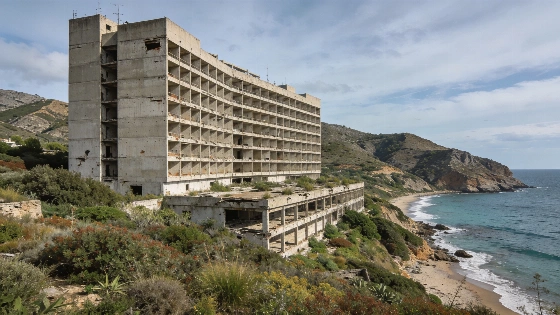
Andalusian Council Declares El Algarrobico License Invalid: Path to Demolition Clear. Andalusia has declared the El Algarrobico construction license invalid. Authorities and Greenpeace are demanding the immediate demolition of the hotel. The decision could put an end to the longstanding conflict over the coastline.
A key step has been taken in Andalusia toward demolishing the El Algarrobico hotel, which for nearly two decades has symbolized illegal development on the coast. The regional Advisory Council has declared the municipal permit issued in 2003 for constructing the hotel on the Carboneras beach to be completely invalid. This decision is supported by both regional and central authorities, as well as Greenpeace, who are insisting on the swift dismantling of the building and restoration of the natural area.
The published opinion notes that the permit was issued in violation of the law: the site was in an area with special restrictions and fell under coastal easement protection. Over the past 20 years, courts have repeatedly confirmed the illegality of the project, yet the hotel has remained on the shore. According to the Council, prolonged legal disputes and actions by both the municipality and the developer have led to an unacceptable delay in enforcing the decisions.
The Carboneras authorities are now required to submit the issue of license annulment to the municipal council. After this, as emphasized by the Andalusian government, preparations will begin for the demolition of the building and restoration of the natural landscape. The Ministry for Ecological Transition has already requested an urgent meeting of the joint commission with the region to coordinate further steps. Greenpeace stresses that the Council's decision is not just a formality, but a legally definitive act that should put an end to the protracted conflict.
For the past 15 years, there has been an agreement between the Spanish government and Andalusia to jointly demolish El Algarrobico, but until now the process has been stalled due to unresolved legal issues. Now, according to those involved, there are practically no obstacles left to dismantling. Greenpeace representatives sharply criticize the Carboneras municipality for years of delaying the implementation of court rulings, arguing that every day the hotel exists constitutes a violation of the law and harms the Cabo de Gata-Níjar national park.
The context of the situation highlights how acute the issue of illegal coastal development and environmental legislation compliance is in Spain. Similar disputes over major infrastructure projects and government decisions regularly attract public attention. For instance, there was recent discussion in the region about the delay in emergency response following a railway accident, which sparked a sharp reaction from local authorities — more details can be found in the article about criticism of the actions of Andalusian authorities after the railway incident.
El Algarrobico has become one of the most prominent examples of conflict between business interests, municipalities, and environmental activists in Spain. As of 2026, the country has several programs aimed at restoring coastal zones and tightening control over the issuance of building permits. In the case of Carboneras, authorities emphasize that enforcing court rulings and restoring the natural environment are priorities that cannot be postponed for years.