The €6.3 million penthouse purchase in Madrid has sharpened tensions around Isabel Díaz Ayuso within the Partido Popular. As questions mount over the luxury property deal, the president of the Community of Madrid has received little public backing from senior party figures, while criticism inside the PP grows louder.
Ayuso tried to rally other PP-led regions to boycott the Council of Fiscal and Financial Policy meeting, hoping to present a united front against the central government’s new regional financing plan. But regional leaders, especially in Andalusia, went their own way and ignored her call. The split exposed the limits of Ayuso’s influence and left her alone in a public standoff with the national government.
The penthouse, purchased by Planifica Madrid in April, covers approximately 481 to 485 m² and was later put back on the market for €6.69 million. Tension is high inside the PP. Conversations in party corridors and private chats focus on Ayuso’s situation and the lack of a clear explanation for why a public entity bought a high-end property through a luxury real estate agency. The penthouse cannot be used as an office or official residence and has become a symbol of questionable decision-making. Neither Ayuso nor her advisers have managed to explain the purchase, fueling speculation and frustration within the party.
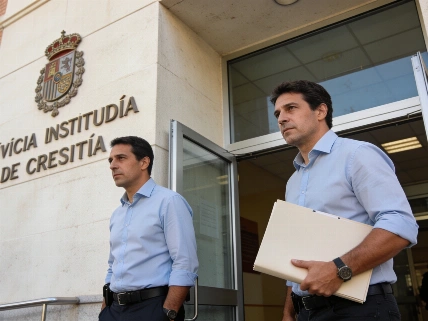
Several major Spanish publications report that the property was classified as residential, not office space, casting doubt on the official explanation that it was intended as a temporary office for Ayuso during renovations at Real Casa de Correos. The discrepancy has become a central point of contention and is under judicial review in Madrid’s Court No. 8, with Más Madrid and PSOE-M participating as popular prosecutors.
Alberto Núñez Feijóo, the national PP leader, has kept his distance. His public defense of Ayuso has been limited to repeating the explanations given by the Madrid government. At a recent event, Feijóo said Planifica Madrid should explain "why it bought a property that cannot be used as an office." Some saw this as subtle criticism, while others viewed it as an awkward attempt to shift responsibility. Either way, the comment added to the uncertainty around Ayuso’s position.
Despite the controversy, Feijóo is still scheduled to headline the annual Madrid PP gathering. The event, which marks the start of the regional political year, will show whether the party can present a united front or whether internal divisions become more visible.
The Madrid government has responded by putting the penthouse up for auction at €6.7 million, hoping to end a story that has dominated headlines. Ayuso’s team insists the issue is politically motivated and should be considered closed, dismissing new details as partisan attacks. But the story continues, with each new fact, including confirmation that Ayuso or her team visited the property before the purchase, as reported earlier, adding pressure.
For Ayuso, the penthouse affair has become an unexpected crisis at a time when she might have focused on government missteps elsewhere, such as the Ceuta border situation. Instead, she faces a cycle of unanswered questions and uncertain party support. The episode shows the risks of political overreach and the fragility of alliances built on convenience. As the auction deadline approaches, the PP’s response will test Ayuso’s ability to recover and the party’s ability to manage internal conflict. If the leadership keeps its distance, Madrid’s political scene could become more divided, with Ayuso’s authority weakened and the PP’s unity at risk.