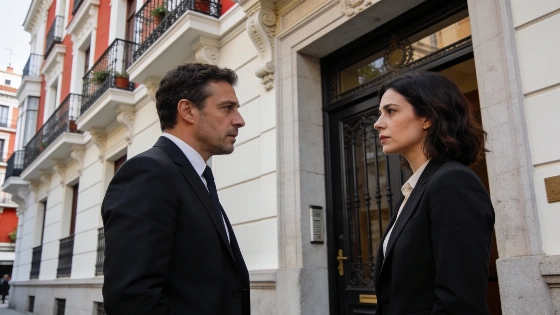
Madrid’s government is under fire after a controversial penthouse purchase. The lack of transparency has sparked legal action and political tension. Opposition parties are intensifying pressure as the new political season begins.
The political landscape in Madrid is set for a turbulent September as Isabel Díaz Ayuso’s administration faces mounting scrutiny over the secretive acquisition and subsequent sale attempt of a luxury penthouse in Chamberí. The property, bought for €6.3 million by the regional government through the public company Planifica Madrid, has become the focal point of opposition attacks and legal complaints, with the PSOE filing a case against Planifica Madrid executives for alleged economic crimes.
Opposition parties are escalating their efforts on multiple fronts. Más Madrid has submitted a series of transparency requests and demanded the appearance of key officials, including Planifica Madrid’s CEO Pedro Corbalán Ruiz and Miguel Ángel García Martín, a close ally of Ayuso. Vox, while criticizing the left, has also called for clear explanations from the president, warning of stronger action if answers are not forthcoming. The controversy is expected to dominate the Assembly of Madrid as institutional activity resumes after the summer break.
The situation is further complicated by ongoing legal troubles involving Ayuso’s partner, Alberto González Amador, who is set to face trial in 2027 for alleged tax fraud amounting to €350,000, and is also under investigation for suspected business corruption linked to the private healthcare giant Quirón. These parallel cases add to the pressure on Ayuso, who now faces one of the most challenging periods since taking office in 2019.
The government’s rationale for the penthouse purchase remains unclear. Officially, the property was intended as a temporary office during renovations, but legal restrictions prevent its use as either an office or an official residence. The timing of the purchase, coinciding with González Amador listing his own Chamberí properties for €3.3 million, has fueled further speculation. The lack of transparency has only intensified the crisis, especially after the deal was revealed by EL PAÍS, not through official channels.
Despite the government’s attempts to downplay the issue, the penthouse sale process—managed by luxury real estate firm Promora, which received a €180,000 commission—has raised questions about public spending and the true cost to taxpayers. The property is now back on the market for €6.7 million, but if no buyer emerges by the September 7, 2026 deadline, the controversy could deepen. The operation has not been listed in the region’s public procurement portal or in Planifica Madrid’s annual accounts, leaving many details opaque.
Ayuso’s team has tried to shift focus to her involvement in wildfire recovery efforts in the Sierra Oeste, but the penthouse affair continues to overshadow her agenda. The president’s visible irritation with the media and the unusual secrecy around her public appearances reflect the strain within her administration. Meanwhile, the national leadership of the PP has distanced itself, insisting that Ayuso must provide her own explanations, while local party figures express confusion over the decision-making process.
As the political season restarts, the penthouse scandal is expected to remain at the center of debate in Madrid. The opposition is preparing to use every available channel to demand accountability, and the outcome of the property’s sale could have significant implications for Ayuso’s standing ahead of next year’s regional elections. The situation echoes other recent political crises, such as the diplomatic tensions described in the fallout from Rajoy’s remarks before the Spain-France World Cup semifinal, highlighting how unexpected controversies can quickly escalate into major challenges for political leaders.
For context, Chamberí is one of Madrid’s most exclusive districts, known for its high property values and historic architecture. The use of public funds for luxury real estate acquisitions is rare and typically subject to strict oversight. In Spain, regional governments have limited authority to purchase official residences, and such moves often attract public and media scrutiny. The current case stands out for the secrecy surrounding the transaction and the lack of clear justification, making it a test case for transparency and accountability in regional governance.