A recent OCU survey puts average spending by Spanish families at €2,480 per student during the 2026-2027 school year, up 4% from the previous year. It gathered responses from nearly 1,100 students aged 3 to 18 and found impressive cost differences by school type and region.
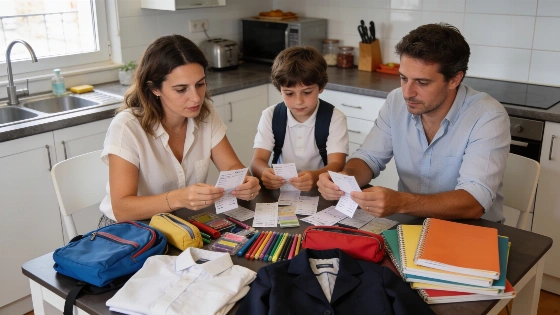
The initial outlay for September alone stands at €548 per student. It covers essentials including textbooks, school supplies, uniforms and contributions to parent associations. Textbooks account for €192, while clothing and footwear add another €224. School supplies cost nearly €90, and the annual AMPA fee averages €43. Families who need to buy a computer or tablet may face even higher starting costs.
Annual Spending Breakdown
The €2,480 average covers more than the first days of school. It includes annual fees for enrollment, books, uniforms and devices, along with monthly expenses for tuition, meals, transportation and extracurricular activities. OCU says the figures come from survey responses, not official administrative data, but reflect the impact on household budgets.
Costs vary widely by educational stage and location, with school type making the biggest difference. Primary and Baccalaureate levels often prove more expensive than Secondary, while the gap between public, semi-private (concertada) and private schools is striking.
Public vs. Private: The Cost Divide
School choice has the greatest influence on family spending. In public schools, the annual cost per student is around €1,300. Families at concertada schools pay an average of €2,156 more, while private school bills can exceed €8,700 a year, almost €7,500 more than in public education. Enrollment and tuition fees lead much of the gap: concertada schools average €1,681 for these items, while private schools approach €6,000.
Regional differences are also pronounced. Madrid tops the list at an average of €3,512 per student, followed by Catalonia at around €3,000. Families in Galicia spend about €1,680, compared with €2,007 in Andalusia and €2,190 in the Valencian Community.
Managing the September Spike
Although September's visible expenses are large, they account for only a fraction of the annual total. Families continue paying for meals, transportation and extracurricular activities throughout the year. Reusing clothing, comparing prices and checking for regional textbook programs can reduce initial spending, but recurring costs remain a challenge.
Financial Aid and Support
For households with multiple children or limited income, the financial strain is even greater. Some national programs offer assistance with tuition, transportation, meals and special educational needs, with eligibility and amounts depending on specific criteria. Regional and municipal initiatives, including Catalonia's €60 school supply vouchers, offer additional support, though availability and requirements differ across Spain. OCU's annual survey calls for expanded aid and tax deductions to help vulnerable families manage rising costs.
As the new school year approaches, families are urged to review available support and plan carefully for education expenses.