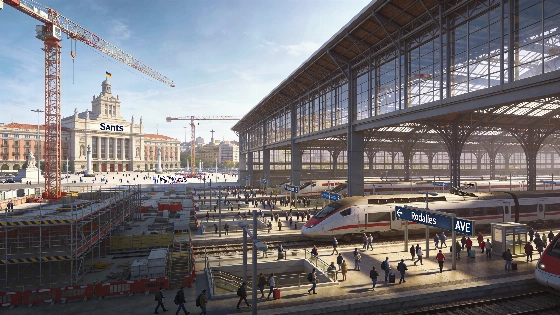
Barcelona's Sants station is set for a major change, with the space dedicated to high-speed rail nearly tripling and the area for Rodalies commuter services almost doubling. The expansion will extend into the adjacent plaça dels Països Catalans, preparing the hub for a projected rise to almost 75 million annual passengers by 2030. The first phase, backed by an investment exceeding €150 million, includes restoration of the plaza and reorganization of the surrounding area, information from Adif.
The biggest increase will be in the high-speed section, where available space is set to grow by 175%. Its passenger hall will expand from 3,700 to 10,220 square metres, while the Rodalies area will grow by 85%, reaching 4,400 square metres. Customer-service areas are also set to increase by 40%, and the general concourse by 15%.
Access arrangements will change during construction. The mountain-side entrance is due to close in the third quarter of 2026 and reopen by year-end. The plaça dels Països Catalans will also close temporarily, while a new sea-side entrance is scheduled to open in September 2026. The redesigned station will have four levels: a basic concourse for access and boarding; a first level with an additional boarding hall; a second-level VIP area for high-speed passengers; and a third level for Adif offices and technical rooms.
Adif is contracting the preparation of a phased plan for the wider change, with the aim of sequencing the works efficiently and economically. Proposals include moving the taxi rank underground, building a new car park on the mountain side and creating a new entrance to the Barcelona Metro. Together, these changes are intended to make Sants a multimodal hub that can accommodate rising demand.
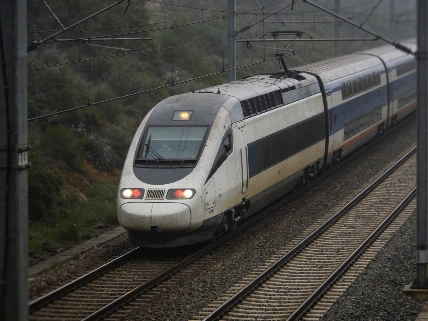
The station's redevelopment is part of a broader effort to expand and redistribute rail capacity across Barcelona. The future Barcelona-La Sagrera intermodal station is planned to bring together high-speed and long-distance trains, Rodalies and metro services, as well as urban and interurban buses. High-speed trains have been passing through its infrastructure since March 2025, though passenger services have not yet begun stopping there.
By October 2026, an average of 43 high-speed trains per working day were running through La Sagrera's structure. Three of its eight international-gauge high-speed tracks and four of the ten tracks in its technical train-treatment zone were in service. Work continued on the remaining track sections and switches, along with electrification, signalling and civil-protection systems. La Sagrera's contracted investment stood at €1.26 billion, with more than €1.12 billion executed, according to figures supplied by the Ministry of Transport and Sustainable Mobility.
La Sagrera's architectural and installation projects were expected to go out to tender in autumn 2026, with more than €340 million in additional investment estimated for this stage. The work covers road access and surface infrastructure, alongside urbanisation around the future station. Barcelona's wider transport plans also include the proposed R-Aeroport line: a 22.7-kilometre route with nine stations, including Sants, Sagrera-TAV, Passeig de Gràcia, El Prat and both airport terminals. Trains are planned to run every 15 minutes, with a journey of slightly more than 20 minutes between Passeig de Gràcia and Terminal 1. Projected usage is about seven million passengers a year.
The station's expansion is also unfolding in a district reshaped by the covering of railway infrastructure. Barcelona's official architecture programme says the covered tracks have been converted into an urban park, with green areas, leisure spaces, playgrounds, sports routes and public amenities. That change frames the work around Sants as a transport upgrade and part of the continuing redesign of the station's approaches and surrounding neighbourhood.
Barcelona Sants is the city's basic railway station and a critical node for local and regional travel, as well as long-distance journeys. Its modernization is expected to improve passenger circulation and accessibility, while strengthening connections with other transport modes. La Sagrera and the planned airport rail link are also part of the wider expansion of the city's rail network.