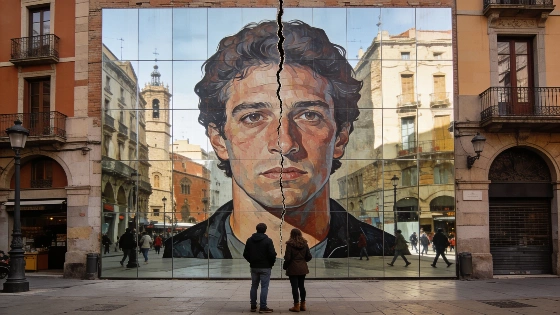
A new mural, ‘L’Escletxa’, stands in Barcelona’s Born district as a public tribute to women and children killed by gender-based violence. Ilium Collective created the artwork, which was officially unveiled on a party wall at the intersection of Carrer de la Pescatería and Carrer de Tripó. A striking fissure cuts down its mirrored surface, etched with the names of more than 150 victims and symbolising the lasting scar left by these crimes.
The inauguration brought together city officials, including Raquel Gil, Barcelona’s Deputy Mayor for Feminisms, and representatives from the Plataforma Unitaria Contra las Violencias de Género (PUCVG). The city council and local residents backed the project, which cost €142,000 and was coordinated through the Municipal Institute of Urban Field’s party-wall programme. The artists say the mural aims to make different forms of gender violence visible, including vicarious violence against children and the murders of trans women. Barcelona’s municipal “Muros que hablan” programme also uses public walls for civic and community storytelling.
Barcelona’s first officially recorded feminicide dates to 2003, when Ana María Fábregas Escuder was killed after authorities ignored her repeated complaints of abuse. Since then, the city has continued to confront the need to address and remember victims of gender-based violence. The mural’s mirror reflects their names, inviting passersby to face the reality of these losses in a public space.
During the ceremony, Raquel Gil stressed the importance of public recognition and remembrance in combating gender violence in Barcelona. The PUCVG pointed to the persistent lack of education and awareness around the issue, noting that the group has held monthly demonstrations for 19 years. Its members have pledged to continue until a month passes without a single feminicide, a key stage they have yet to reach.
Spain’s Ministry of Equality reported that 43 women were killed by a current or former partner in 2026, bringing the official total to 1,384 since records began in 2003. The ministry also recorded 32 minors orphaned by gender-based violence in 2026 and 542 since that series began in 2013. These figures cover killings by current or former intimate partners, not every form of gender-related killing. The memorial’s more than 150 names represent a broader scope, including children and trans women, and should not be treated as directly comparable with the ministry’s intimate-partner series.
Gender-based violence remains a impressive concern in Spain. National figures document the continuing toll of intimate-partner killings and their wider impact on children left without a parent. Activists say more resources and education are needed to prevent further tragedies. Public memorials like ‘L’Escletxa’ help keep the issue visible and honour those lost to violence. Its location in a busy urban area keeps their memory present in daily city life.