The Basque Government has again granted semi-freedom to María Soledad Iparragirre, known as ‘Anboto’. This move comes five months after a judge revoked the same measure. Victims’ groups call it systematic leniency.
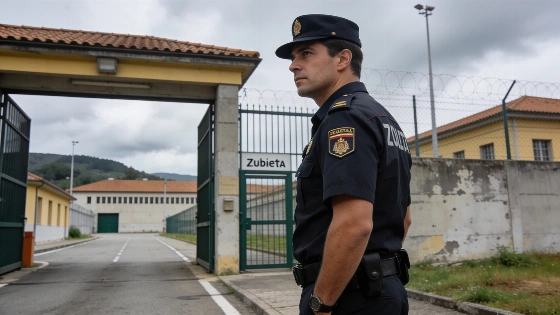
The Basque Government has reinstated semi-freedom for María Soledad Iparragirre, known as ‘Anboto’, a former ETA leader currently held in Zubieta prison. The decision, made on September 2, 2026, comes five months after a judge from the Audiencia Nacional overturned the same arrangement, citing the seriousness of her crimes and a lack of grounds for leniency, according to El País.
This latest approval, issued by the Department of Justice and Human Rights under María Jesús San José, uses Article 100.2 of the Penitentiary Regulation. This rule allows inmates classified in second degree to leave prison on weekdays for work or volunteer activities, as long as they return to sleep in jail. The prison’s treatment board unanimously supported the plan, which now includes a fixed volunteer work schedule outside the facility—a condition the court had previously demanded and is now formally part of the reintegration plan, as reported by El País.
Unlike the previous attempt in March 2026, the new semi-freedom plan for Iparragirre specifically ties her weekday releases to a fixed volunteer work schedule, addressing the court's earlier objections.
Iparragirre’s criminal record includes convictions for ten murders, possession of explosives, attacks, arson, weapons offenses, and crimes against the Crown, resulting in a 30-year sentence. Despite this, Basque authorities argue that her recent conduct—acknowledging her crimes, partial payment of civil liabilities, and renouncing violence—justifies a more flexible regime. The government had already tried to apply Article 100.2 in March, but the Audiencia Nacional blocked it in April, insisting that the gravity of her offenses outweighed any signs of rehabilitation.
This is not the only case of its kind. The same judge also revoked semi-freedom for Juan Ramón Carasatorre, another former member of the Donosti commando, only for the Basque Government to reapply the measure months later. Victims’ associations have sharply criticized this pattern. Consuelo Ordóñez, president of Covite, called it part of a systematic policy of progressive release for ETA prisoners, echoing the agenda of the abertzale left. The Asociación de Víctimas del Terrorismo (AVT) went further, warning that only 32 ETA inmates now remain in standard prison conditions, while 123 have third-degree status, 28 have flexible regimes, and 62 are on parole—figures the group says amount to impunity.
The regional government emphasizes that the semi-freedom regime under Article 100.2 is not an automatic release but a flexible arrangement for second-degree inmates, requiring nightly return to prison. The opposition Partido Popular (PP) has already demanded explanations from the Basque authorities, arguing that the new plan differs from the previously annulled one only by restricting outings to volunteer work.
Democrata
Iparragirre’s involvement with ETA began in 1981, with roles in the Araba and Madrid commands before she fled to France. She later became one of the public faces of the group’s dissolution, reading the 2018 statement announcing ETA’s end. The government’s repeated use of Article 100.2 for high-profile prisoners has become a flashpoint, with critics arguing that legal technicalities are being used to bypass judicial oversight and speed up reintegration, regardless of the original sentences.
The Basque Government presents these decisions as steps toward social reintegration and compliance with judicial requirements. But the backlash from victims’ groups and the judiciary shows a deep divide over the limits of penitentiary policy. The numbers cited by AVT—over 200 former ETA members now benefiting from some form of release—highlight the scale of the change. As a previous investigation into political responses to security issues showed, such moves rarely escape public and institutional scrutiny.
The Basque Government’s persistence in granting semi-freedom to figures like ‘Anboto’ points to a clear strategy: prioritize reintegration and regional autonomy over the symbolic weight of past crimes. While this approach may meet legal requirements, it leaves victims’ associations and much of the judiciary unconvinced. For some of Spain’s most notorious convicts, the path from prison to partial liberty now appears to depend more on administrative decisions than on judicial consensus.