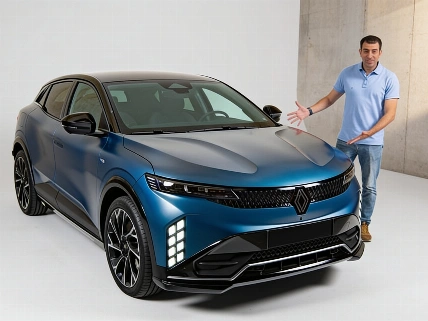
Tom and Sofie Vanpraet pay just 339 euros a month for two company SUVs in Belgium. Their story exposes the sharp contrast between corporate perks and the true price of private car ownership.
Step outside the Vanpraet home in Aalst and you’ll spot two company SUVs. The monthly bill? Just 339 euros for both. That’s less than what many Belgians pay just to keep one private car on the road. Insurance and fuel alone would eat up that sum fast.
Tom is 42. Sofie is 50. They opened up their finances to Het Laatste Nieuws. Their numbers lay bare a system that gives employees access to new, well-equipped cars for a fraction of what private owners pay. Official figures from SPF Mobilité and ONSS show the scale: by early 2026, Belgian employers provided 629,156 company cars for both work and personal use. Back in 2007, that number was just 271,949. Now, about 15% of salaried workers in Belgium drive a company car. Growth has slowed to 0.2% a year after years of 5% jumps.
Tom pays 195 euros a month for his electric SUV. Sofie pays 144 euros for her hybrid. They don’t pay for fuel or charging. Their employers cover those costs. “For those amounts, it’s impossible to finance, fuel, insure, and maintain a car yourself,” Tom says. Their math is blunt: owning two similar cars privately would cost them around 20,000 euros a year. That includes financing, maintenance, insurance, tires, and taxes. The real cost to the employer is higher. For a fully electric car ordered after July 2023, the minimum employer social contribution in 2026 is 42.34 euros per month, according to sector analysts.
In 2025, only about 0.57% of Belgian employees received a mobility budget without a company car, highlighting the limited uptake of alternatives to corporate vehicles.
But Tom and Sofie are honest. If they had to pay out of pocket, they’d pick something else. “If we had to pay ourselves, we’d choose a good second-hand car that feels safe. It wouldn’t necessarily be the latest electric model,” Sofie says. Companies, though, have to pick the newest, least polluting cars. Most families can’t afford those. Tax rules drive this. Deductibility for combustion engine cars is being phased out. Electric vehicles bought in 2026 stay 100% deductible for companies, as recent government rules confirm. That’s why company fleets fill up with new electric cars. Private buyers stick to cheaper used models.
The Vanpraets don’t use their cars the same way. Tom commutes almost every day. He racks up 30,000 kilometers a year between Antwerp, Brussels, Ghent, and Mechelen. He drives, especially to Antwerp, leaving at six in the morning to beat traffic. If his office is near a train station, he takes the train. Sofie barely uses her car. She works from home two days a week. She takes the train to Brussels—her employer pays for that too. She only drives to regional offices or training sites that are hard to reach by train. By 2027, her hybrid will be swapped for a fully electric car. The benefit-in-kind for employees depends on the car’s catalog value, age, and carbon coefficient. For a new electric car, the rate is about 3.43% of the catalog value, with a minimum taxable amount of 1,690 euros per year in 2026, according to NextMobility.
Charging at home isn’t possible for the Vanpraets. They live in a terraced house. Tom uses public charging points in Aalst and plugs in at bigger offices during the day. The family avoids doubling up on trips. If they go to the coast for a weekend, one takes public transport. Their daughter Pien walks to school. Sam and Nell, who already work, use electric bikes.
From 2027, Belgian employers with more than 50 staff and a company car policy will be required to offer a mobility budget option to eligible employees. This budget can be used for public transport, cycling, renting housing near work, or an eco-friendly car, but cash payouts are subject to a 38% social contribution.
One trip sticks in their minds. The family holiday to Spain. Flights and a rental car for five cost them 3,000 euros. They say they wouldn’t spend that much again on travel like that.
The company car debate is alive in Belgium. Proposals to cut or scrap the benefit come up often. Tom would still pick a company car “for his job.” Sofie is more interested in the mobility budget her employer offers, but she finds it impractical right now. “If it were properly compensated through salary, I’d look for other solutions and use a shared car when needed.”
Belgium’s company car system faces tough questions. The country is weighing the environmental and financial impact of these perks. The Vanpraets’ story shows the gap between what families can afford and what companies provide. As the push for greener fleets speeds up, the real question is who pays for the change. The contrast is even sharper when you look at new electric vehicle safety features, like the earlier breakdown of battery ejection systems for emergencies. The landscape is shifting fast.
One thing is clear. The real cost of driving often hides behind payroll deductions and company policies. For most families, the choice between a company car and private ownership isn’t just about convenience. It’s about access to technology, money, and what employers are willing to cover. As Belgium moves toward stricter environmental rules and new mobility models, the gap between corporate perks and everyday budgets will only grow unless policy keeps up with families like the Vanpraets.