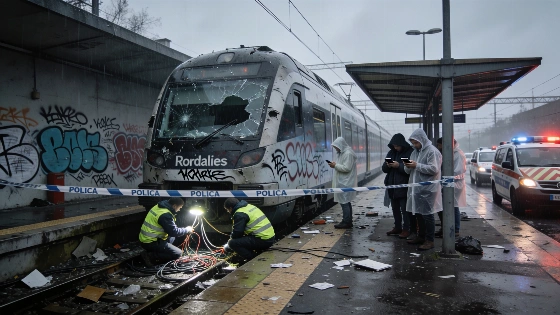
Train services between Lleida and La Plana-Picamoixons in Tarragona are suspended after a cable theft late last night sparked multiple fires and extensively damaged critical railway infrastructure. Adif confirmed the incident, which has left the region without a clear timeline for restoring normal rail operations.
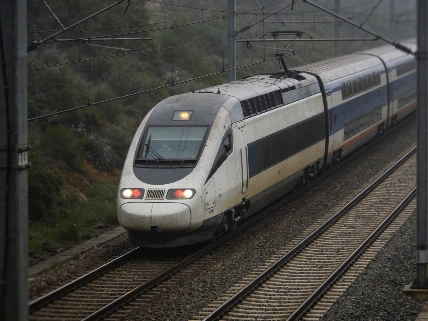
The affected routes include the R13 and R14 Rodalies lines, which carry medium-distance passengers between Barcelona and Lleida via Valls and Reus. Renfe has introduced an alternative road transport plan for passengers, while freight trains are being rerouted through the Zaragoza-Móra-Barcelona corridor. Adif says the systems targeted in the theft are impressive for train regulation and safety. Given the extent of the damage, repairs are expected to take at least several days.
The disruption comes amid a wider rise in railway cable theft across Catalonia. Figures from Adif, reported by Diari de Tarragona, record 47 copper-cable theft complaints in Tarragona and 320 incidents across Catalonia between January and September 2026. The same report said approximately 3,000 trains had been affected, with around 60,000 minutes of delays. Adif described the damaged systems as “devastated, inoperative or very badly deteriorated.”
Adif technical teams are assessing the structural impact on railway installations and preparing phased work plans to restore the affected systems, including replacement solutions. No estimate has been given for when train circulation might resume. In a separate assessment of theft-related damage on the Barcelona-Lleida route via Valls and Reus, Adif put repair and restoration costs at approximately €14 million, with work expected to continue until the end of 2026. The agency is also tightening security in coordination with the Mossos d’Esquadra and other police forces.
The disruption began around 23:00, when Adif detected power outages at several substations and irregularities in track circuits between Lleida and La Plana-Picamoixons. The first fire broke out at a signal cabin at Vinaixa station, linked to the theft of electrification cables and the severing of fiber-optic lines. The blaze spread to nearby infrastructure, affecting the Vinaixa-Riu Milans and Vinaixa-Canal d’Urgell sections. Basic traffic control systems at Vinaixa and Canal d’Urgell were destroyed, while the condition of those at Riu Milans and Les Borges Blanques remains under review. For safety, the catenary power supply between La Plana-Picamoixons and Les Borges Blanques remains disconnected as firefighters extinguish the remaining hotspots.
Once the full extent of the damage is known, Adif plans to file a formal complaint with the Mossos d’Esquadra. In a separate investigation into copper theft from wind farms in Catalonia, the Valencian Community and Aragón, Mossos made four arrests over 12 alleged thefts, including eight in Tarragona and Lleida. Investigators said the group repeatedly targeted renewable-energy installations, removing hundreds of metres of cable and copper busbars. The case points to the wider regional reach of copper theft across transport and energy infrastructure.
Another October incident shows how operational consequences depend on the extent and type of damage. A copper-cable theft between Binéfar and Monzón on the conventional Zaragoza-Lleida railway delayed passengers but did not force a line closure or replacement buses, Renfe said, as reported by Segre. The corridor also carries freight linking the ports of Tarragona, Valencia and Barcelona, with an estimated 15 to 30 freight trains using it daily.
The incident has forced authorities to coordinate emergency measures and exposed the vulnerability of critical transport infrastructure to targeted theft. It follows other high-profile robberies affecting public services in Spain, including a recent violent home invasion in León involving the ‘Tren de Aragua’ gang, which led to several arrests, as reported in a related case involving organized crime and infrastructure attacks.
Railway cable thefts have become a growing concern across Europe, often disrupting services and driving up repair costs, with operators responding by tightening security. In Spain, the rail network is a critical link for commuters and freight, especially in regions like Catalonia, where alternative transport options are limited. The current incident brings operational and economic risks as repair crews work to restore service, leaving passengers and businesses along the affected corridor facing ongoing uncertainty and delays.