Spain’s Constitutional Court will consider an appeal over the voting ban affecting beneficiaries of the Ley de nietos. Its legal advisers recommend rejecting it, while the government prepares a first package of social measures.
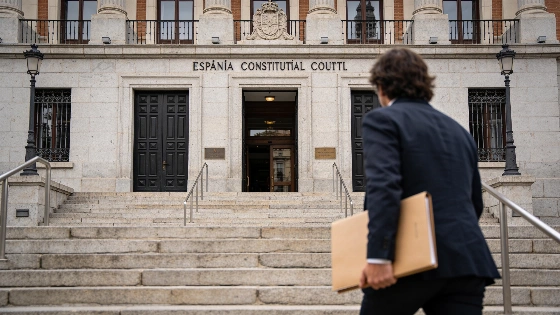
The Tribunal Supremo ruling currently bars beneficiaries of the Ley de nietos from voting in the 29 November general election. On Tuesday, the Tribunal Constitucional is due to consider the Defensor del Pueblo’s appeal seeking to have that ruling set aside. The restriction affects an estimated 160,020 to 163,020 new Spanish citizens living abroad who obtained citizenship under the 2022 Democratic Memory Law, which extended eligibility to descendants of Spaniards exiled or forced to leave during the Civil War and dictatorship.
On 19 October, the Constitutional Court’s Fourth Section referred the question of admitting the appeal to the full court. The court’s legal advisers have recommended that it be rejected as premature, saying other procedural steps must first be exhausted before the Tribunal Supremo. The Supreme Court’s interim measure was justified on the grounds that the accuracy and legality of the electoral register must be safeguarded. The full court has yet to decide whether to admit the case; the appeal concerns the specific proceedings and interim relief, not a final ruling on the constitutionality of the entire law.
The Defensor del Pueblo is seeking the immediate removal of the voting restriction. Its complaint argues that the link between Spanish citizenship and the right to vote is inseparable. It also challenges the alternative route of confirming eligibility through Spanish consulates, arguing that administrative constraints and the consulates’ limited effectiveness could make the process impractical. The Tribunal Constitucional’s reporting judge in the case is Enrique Arnaldo.
The case comes as the government prepares measures ahead of the election.
The Consejo de Ministros is expected to approve its first social measures on Tuesday, 20 October, beginning a series of planned “social Tuesdays” before the 29 November vote. The initial package is set to improve widowhood and disability benefits. It will also provide support for victims of terrorism and gender-based violence. The executive also wants to raise the minimum wage before the vote, but the increase is not part of the initial package. One planned initiative is €45 million for seven projects linked to public universities to build or expand student residences, with up to 2,000 new places in the first phase. Pedro Sánchez announced the funding on Monday. A previous benefits plan also set out measures the government intended to advance before the election.
Education is another focus. The government intends to legislate before the election to reduce class ratios in the second cycle of Infantil and in Bachillerato. A draft decree on minimum requirements for education centres also covers basic vocational training. It proposes limits of 30 pupils in Bachillerato and 15 in basic vocational training. The Education Ministry considers a law covering Primary and Secondary education difficult to pass after the dissolution of the Cortes Generales. Changes to teachers’ working hours would also be difficult to pass. The earlier bill on class sizes would have needed parliamentary approval.
Instead, the executive is seeking to accelerate decrees that do not require Parliament’s approval. The Education Ministry has called the Mesa de Negociación del Personal Docente no universitario for Tuesday to discuss the draft. It sets proposed classroom limits of four children under one year old, six children aged one to two, and eight children aged two to three. The four-child limit and a cap of 20 pupils in groups of three-year-olds are planned to take effect in the 2027/28 school year. The draft was due to go before the Permanent Commission of the State School Council on 29 October.
In election news, Health Minister Mónica García says she will not stand for Frente Amplio in the national contest. She plans to remain in politics and run for Más Madrid in the regional elections in May 2027. Emilio Delgado is set to lead the coalition’s Madrid list; García has argued that Tesh Sidi should take second place.
Tuesday also marks 15 years since ETA announced the end of its armed activity, on 20 October 2011. The group killed 858 people during its 50 years of existence. Its last fatal victim was French gendarme Jean-Serge Nerin, killed in March 2010.