The decisions clear the way for returns in cases where applicants sought an urgent halt, while leaving the underlying asylum appeals to be decided separately. The National Court’s Administrative Litigation Chamber has rejected at least 45 such requests, including 30 from Moroccan nationals, according to decisions published by the court.
The distinction matters. An urgent measure is a request to suspend a return while a court considers the case; its rejection is not itself a final ruling on the asylum claim. Interior Ministry sources say return is the next step after the urgent request fails. The Government reported that 1,697 international protection files had been formally lodged, with 853 resolved and 704 rejected. The Interior Ministry’s Office of Asylum and Refuge publishes statistics on applications and decisions, along with recognition rates, nationalities and provincial distribution.
Applications are assessed individually by the Asylum and Refuge Office, under the Interior Ministry’s Directorate General for International Protection. Spain administers international-protection procedures through its public electronic administration system, with services for people seeking protection and third-sector organizations. International protection covers refugee asylum and subsidiary protection for certain risks. The National Court becomes the remaining route to challenge a refusal and seek a temporary suspension. That administrative process is separate from the Supreme Court case over CERA registrations described in a separate election dispute.
The appeal files describe varied fears. Hernán, from the Dominican Republic, said opposition to forced marriage in his community had led to persecution. The court found no basis to conclude that his return would endanger his physical safety or freedom. Samuel, a Syrian Kurd, cited the situation in Syria; judges said his account did not establish persecution on political or religious grounds. They also found no link to his ethnic identity.
Other accounts involved family threats and alleged police complicity. Ginés, from Bangladesh, said his brothers wanted to take his home and had hired criminals to pursue him. The court said the evidence did not indicate that returning would put his safety or freedom at risk.
Jesús, from Yemen, feared being called up to fight. Juan, from Niger, cited insecurity linked to conflict between tribes. Antonio, from Algeria, described alleged mistreatment over his tattoos and anti-government Социальная сеть posts. He also cited his conversion to Christianity. Judges rejected the urgent requests, saying in some cases that no specific act of persecution or supporting evidence had been presented.
Several Moroccan applicants described abuse within their families or threats linked to social media. Miguel Ángel said he had been mistreated for being homosexual and disinherited. Agustina described sexual violence during childhood and adolescence. Millán said a TikTok channel criticising religions had brought threats from radicalised Muslim circles. The court’s stated basis in these cases was that Morocco had been designated a safe country of origin by the European Parliament.
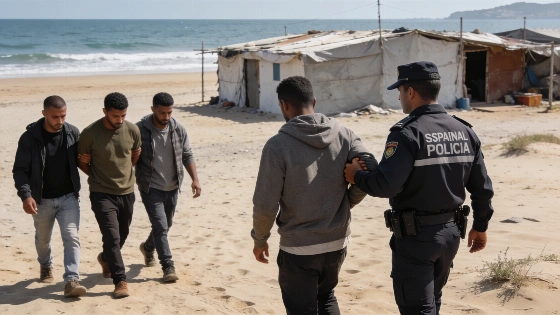
Not everyone whose asylum request is refused takes the case to court. Ceuta duty lawyer Mohamad Mohamed said only three of the 40 or 50 people whose cases he handled had chosen to appeal. Lawyers also say some requests are unlikely to succeed under the legal criteria. Sixteen people were returned to their countries of origin on a Friday after their files were completed; they had not appealed.
After rejecting an urgent measure, the court still has to decide the full appeal, although legal sources say a final refusal often follows. Locating applicants can complicate the process, and police must search for them individually. Lawyer Nieves Morales said one man whose request was rejected had disappeared.
The court has also granted some urgent interim measures. In one case, Yemeni applicant Yassen S. A. was granted protection from removal, then detained at Ceuta’s Temporary Immigrant Stay Centre and returned to Morocco on the same Monday, Cadena SER reported. Humanitarian associations say such cases are not isolated. The Interior Ministry said it would contact his lawyer so he could appear at the border post and be allowed to re-enter Spain.